
M.P. Möller Opus 8303
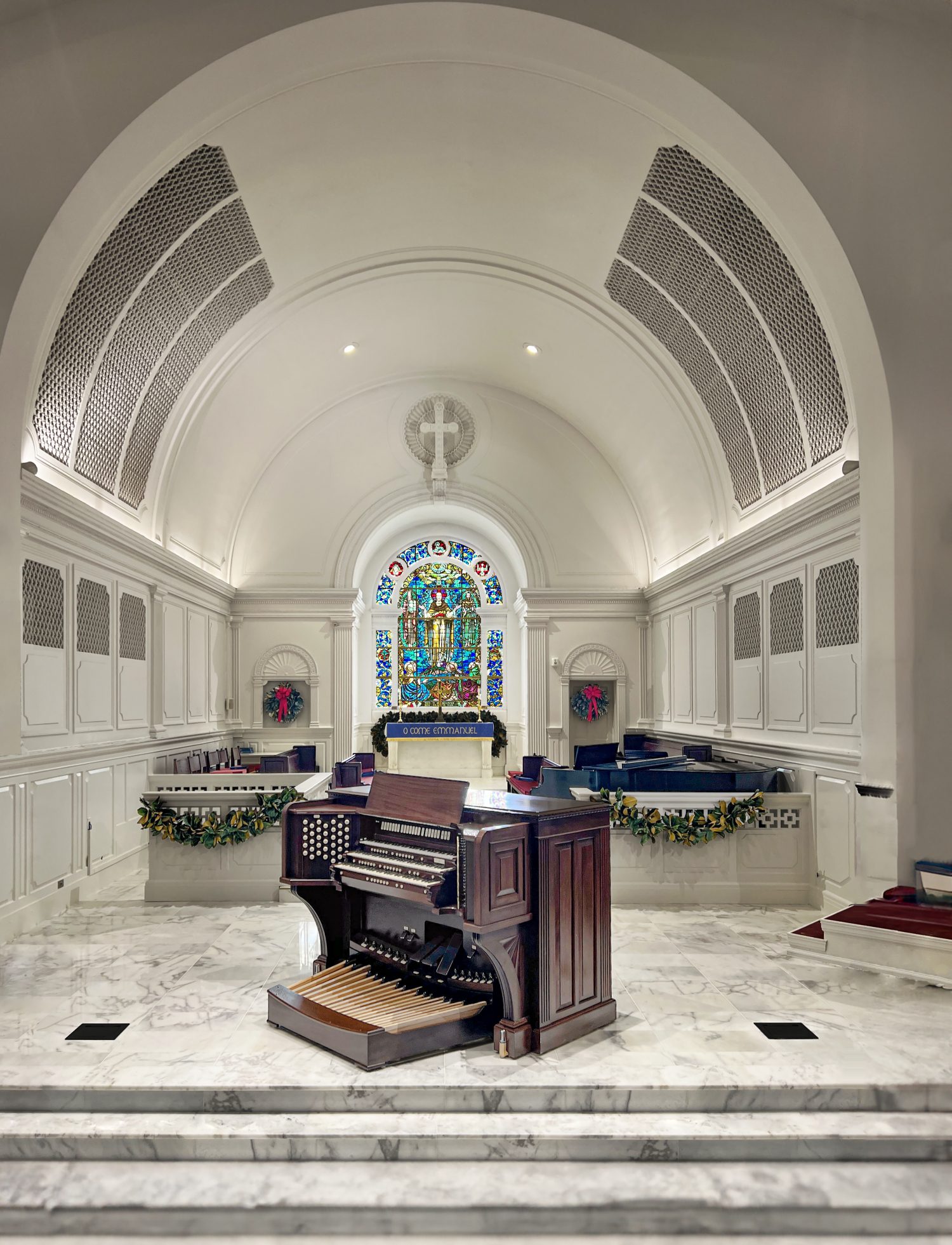
First Presbyterian Church in Lynchburg is a beautiful building with a handsome, acoustically friendly sanctuary. The chancel is an excellent presentation space and easily accommodates the music program and in such a way that the choir properly faces the congregation. The 1950, three-manual 35 rank Möller was rather typical for the era. Voicing worked well for choir and hymns. To better encourage congregational singing, in 1979, Möller was contracted to install a three-stop exposed Antiphonal in the upper reaches of the rear balcony.
Over the years, the Möller had become the victim of revoicing and change, reaching the point that there had become a rather overall raw tone... the organ’s sound had lost any distinction. There were several additions and probably only for lack of space did more not occur. Service efforts had become difficult at best. Choir Director and Organist were now one position. To meet the change, the console had to be moved.
Cory Whittier arrived in 2017 as Director of Music and quickly became aware of the shortcomings. Rather than continue the route of more additions, he prepared and presented a case for a truly realistic look at things. In time, the church selected us to reuse what could be, and essentially build a new organ.
We removed the entire instrument from the building. The original blower had mechanical issues. After careful consideration, we decided to replace it. Pipe chambers and blower room were all cleaned, repaired as necessary, and painted gloss white. All these important spaces were newly lit with LED lighting.
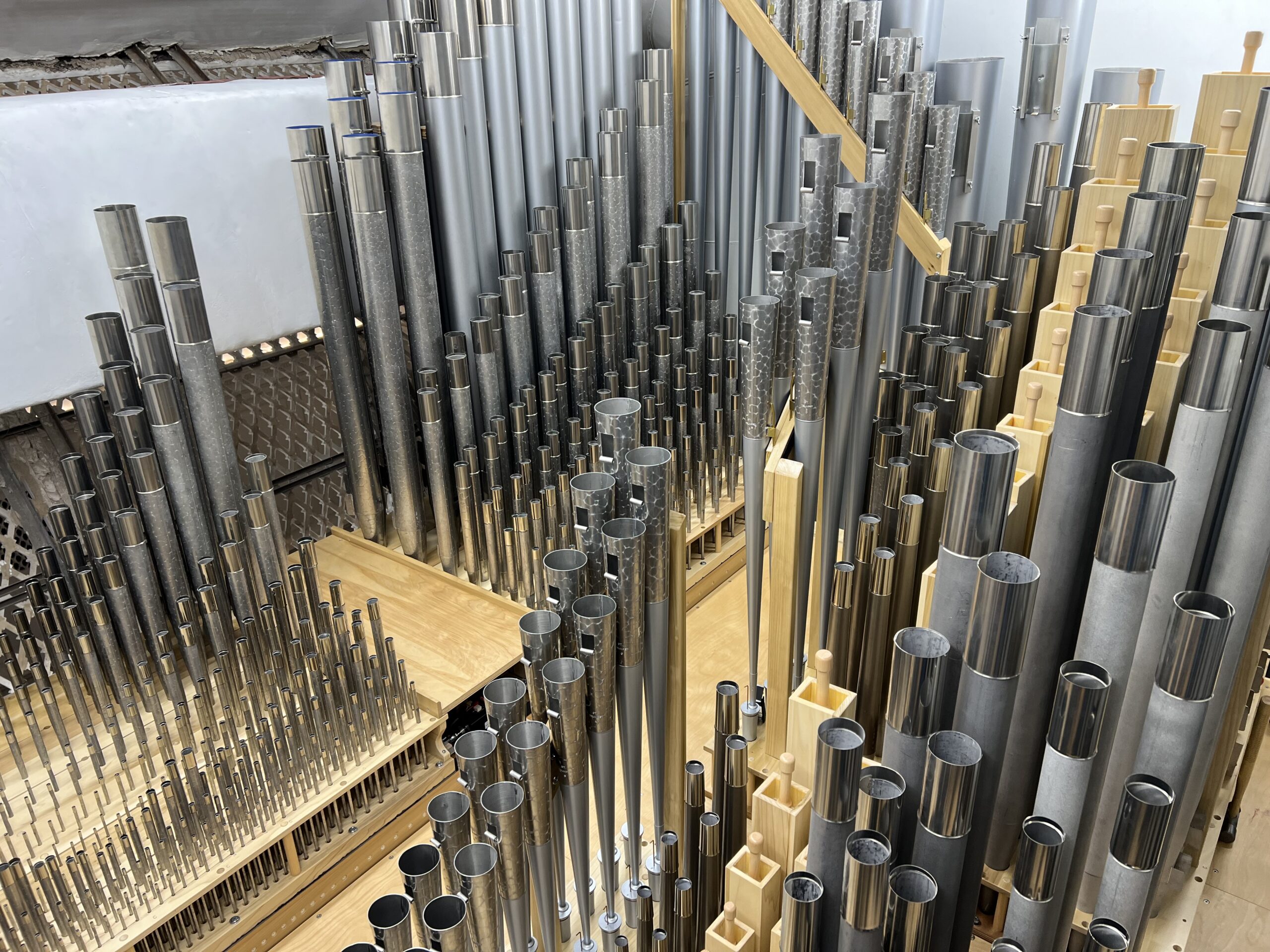
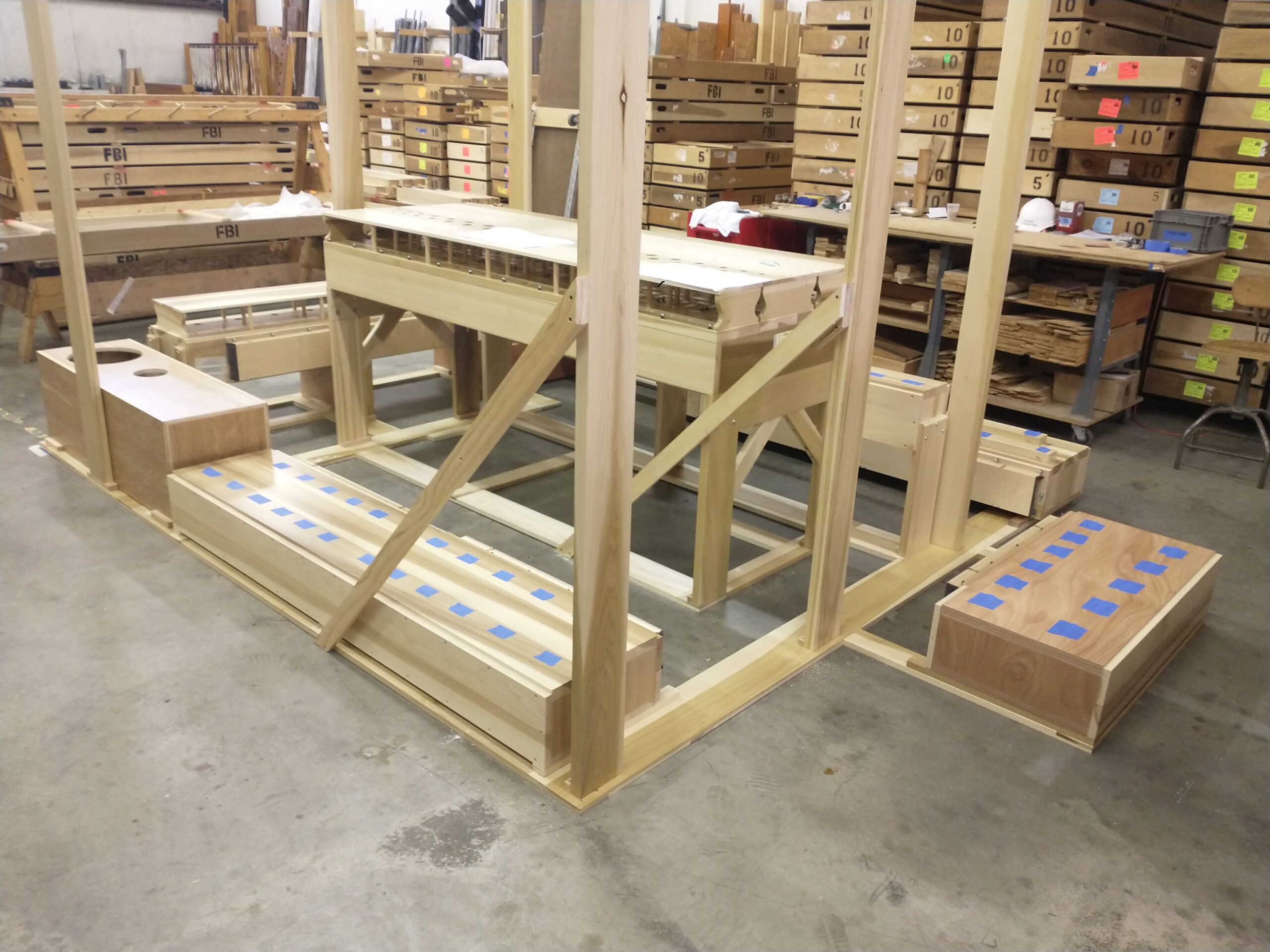
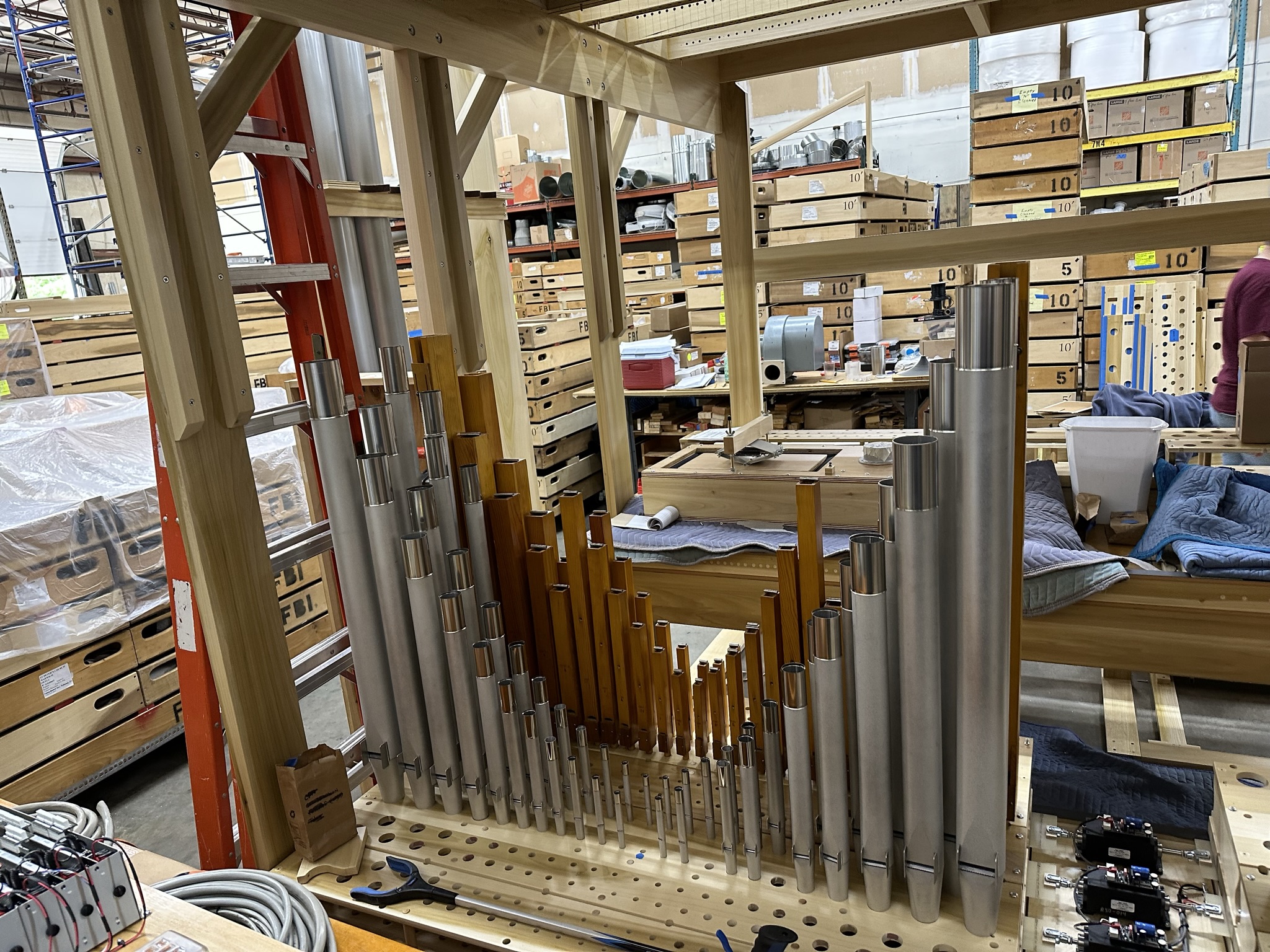
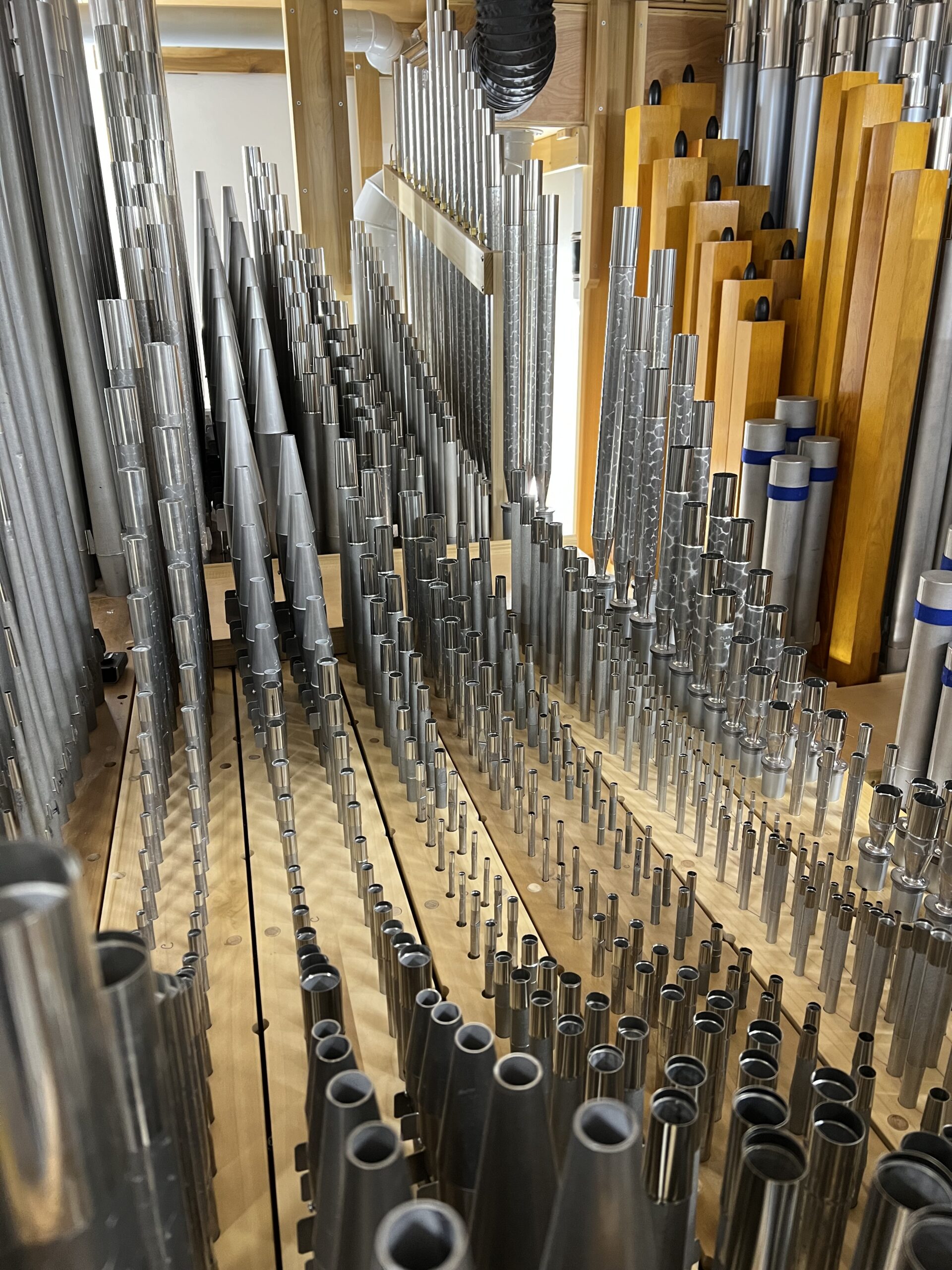
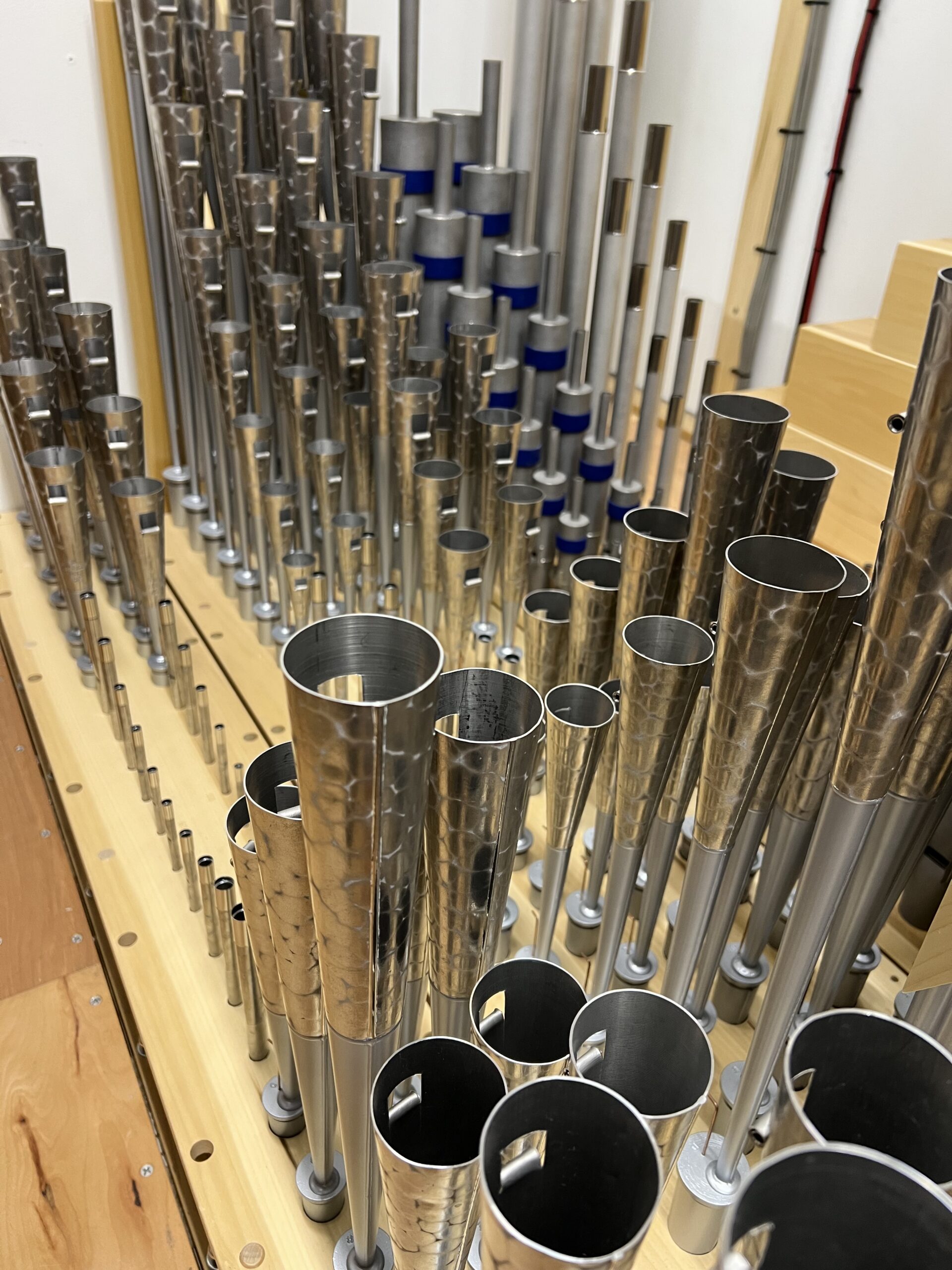
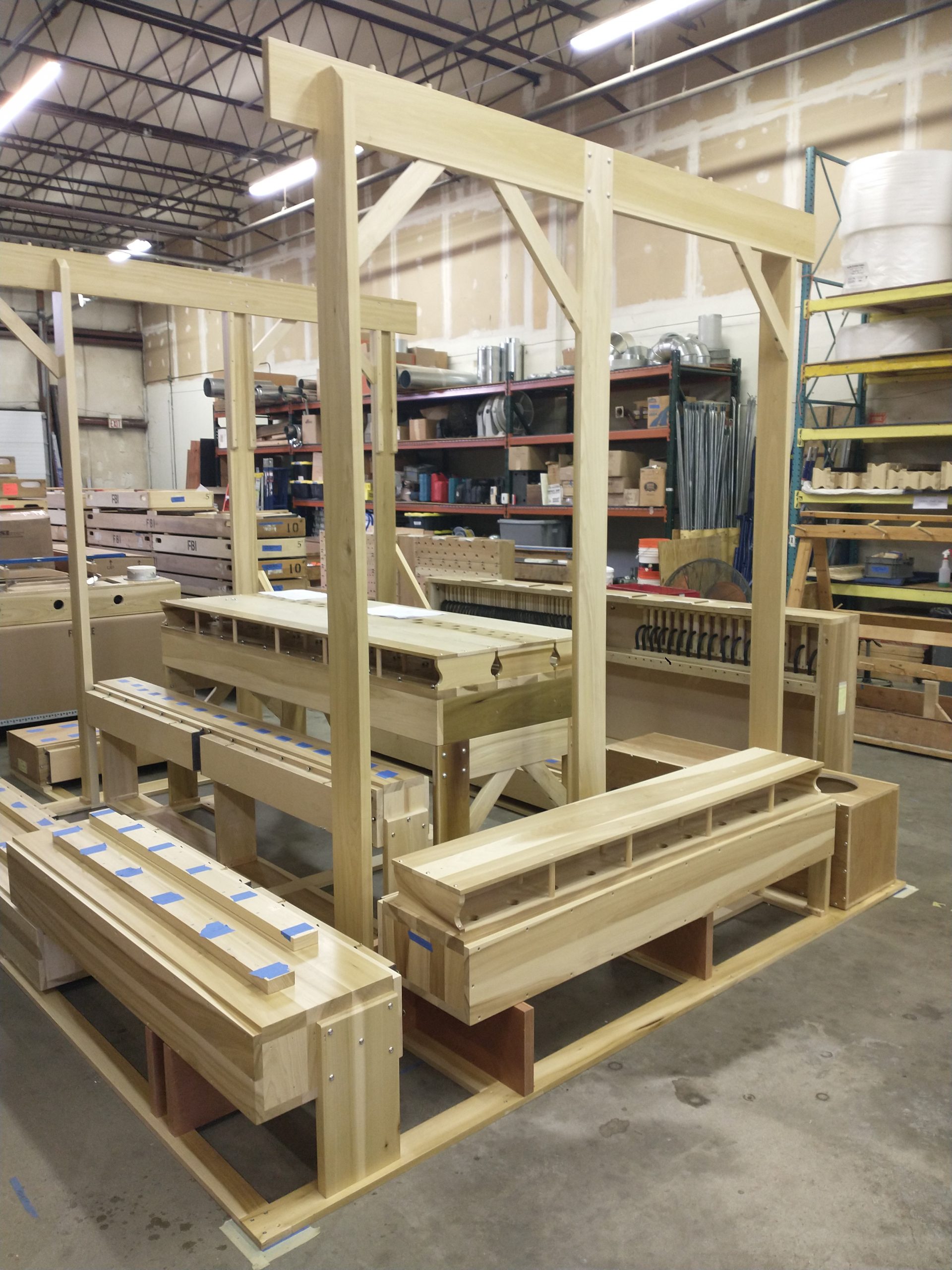
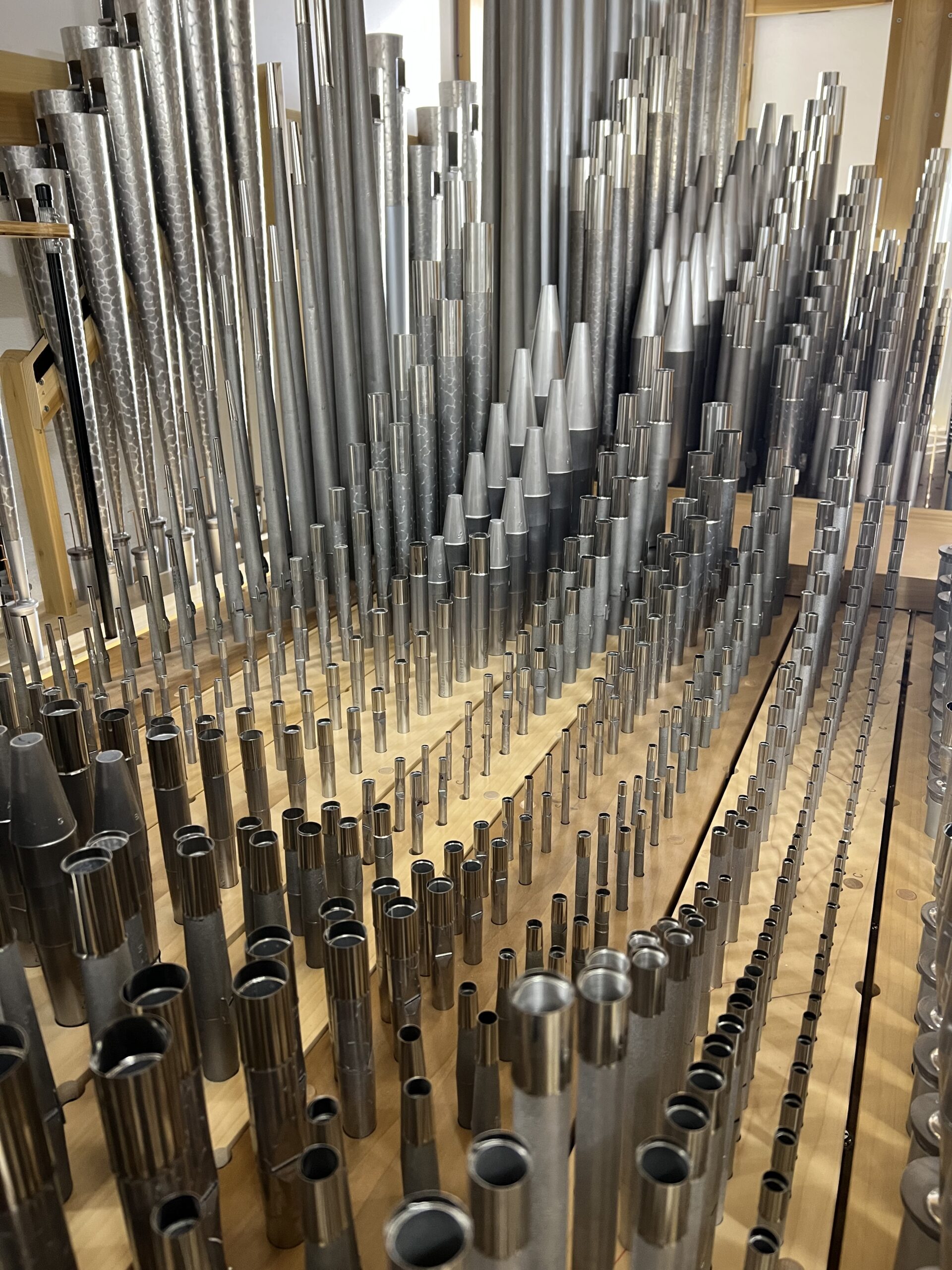
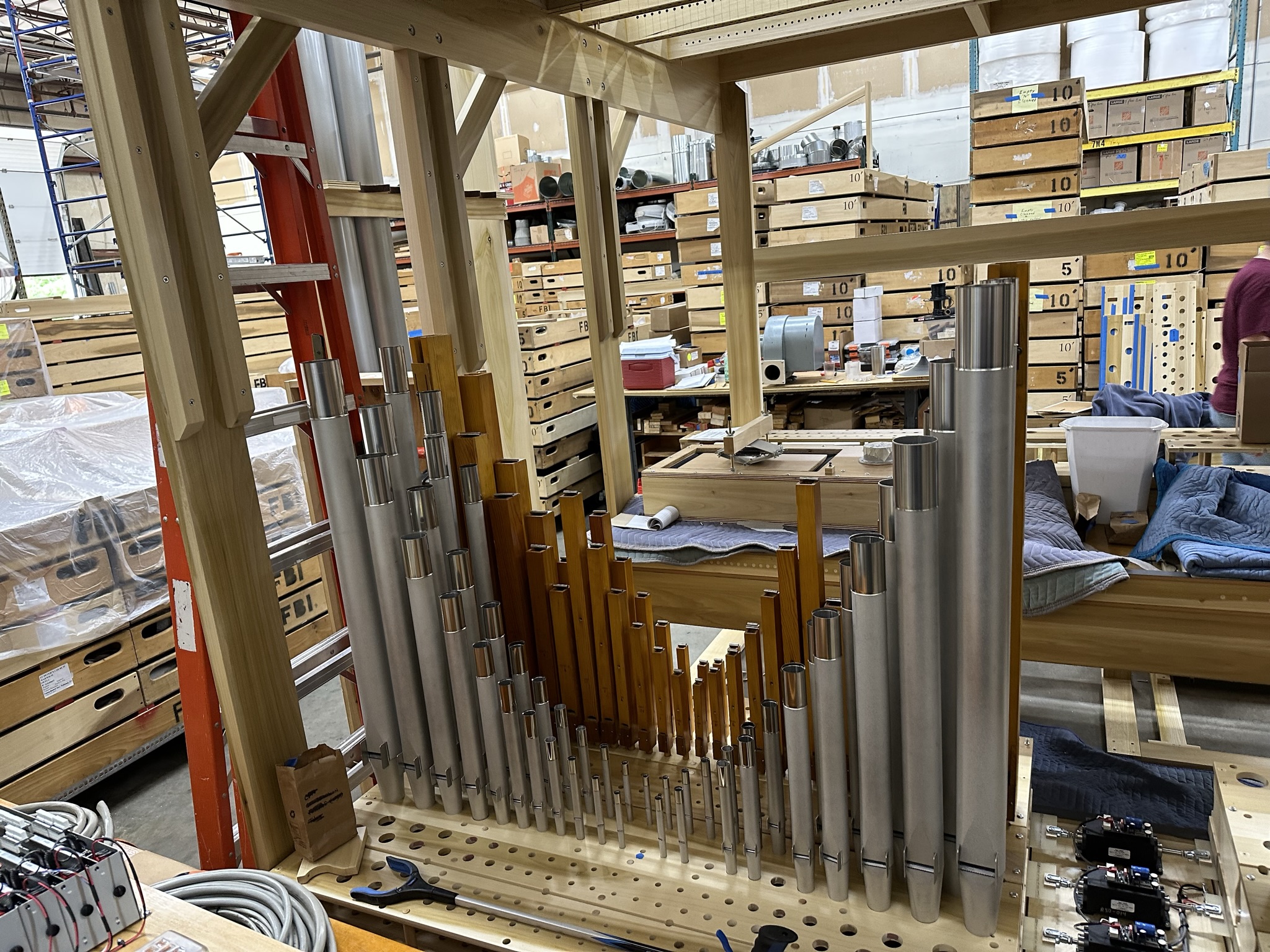
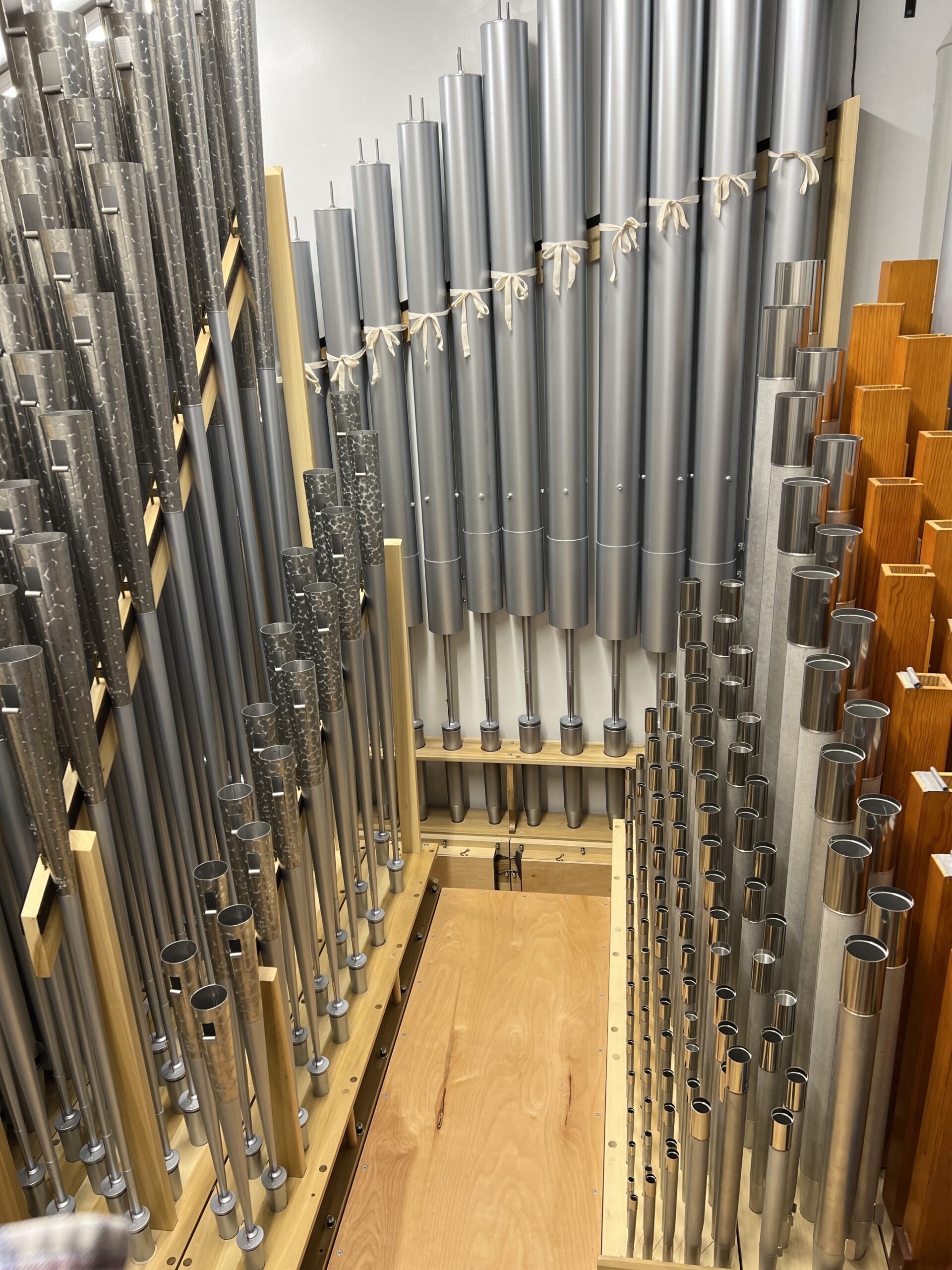
We looked very carefully at what could be retained from the Möller. Our decision was to reuse only 20 stops. Nothing else. The leather-heavy Möller chassis was replaced with all new slider and unit chests. This made for a more service friendly layout that also significantly reduced the amount of leather in the organ. New chests also made possible laying out the stops of each division in such a way that every rank stands where it should for best projection/articulation and without concerns for drawing between pipes. The winding system incorporates OSI’s Schwimmers with built-in tremolos that work beautifully. All new swell shades make for excellent expression and a new console controls a state-of-the-art relay.
The original lattice grilles that define the chamber openings in the chancel also mask walls that much block tonal egress for the Choir division. Its shade openings are necessarily small, increasing the potential for a Choir organ that might be burdened with a buried sound. There was no changing things as the problem came with the original chamber and building construction. Tests showed that despite all the masonry, sound could still get out and into the room, but that division’s pipes required much consideration when it came to their construction and voicing. Our Tonal Director, Milovan Popovic’s decisions were evidently quite right as what encumbrance occurs isn’t affecting the Choir’s flavor or effectiveness.
The necessity to stack the Swell above the Choir saw ceiling heights reduced in both chambers. Some mild mitering and careful layout work took best advantage of the space available. The 16’ Bassoon’s Haskell construction allows for full-length basses, something that, with its placement, has much energized the solidity of this marvelous 16’ sound. The Choir is located below the Swell, and like all the divisions, includes a complete Principal Chorus. The Great is on the opposite side of the Chancel and at the same height as the Swell.
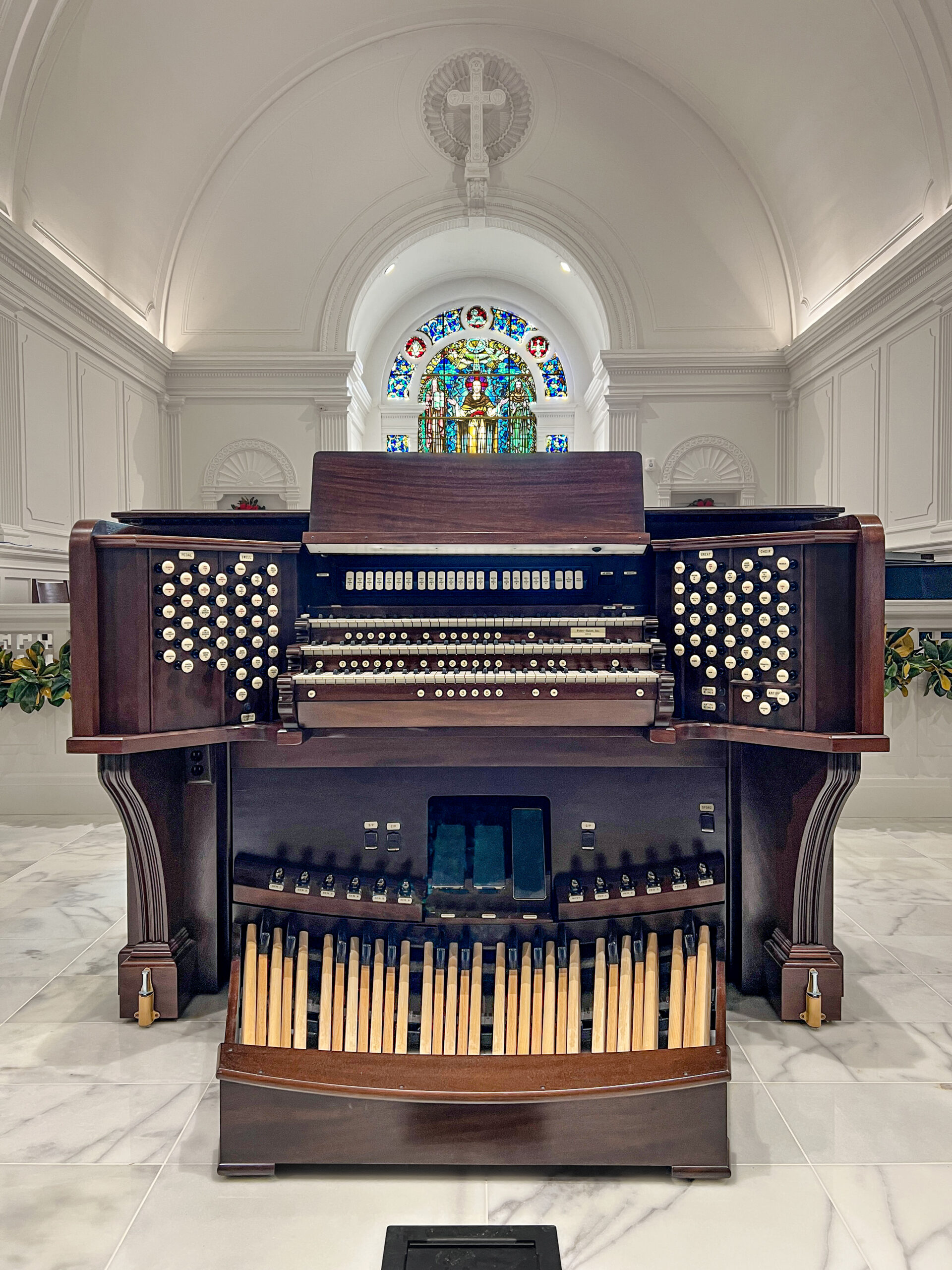
The original console had seen various modifications to accommodate tonal changes. Its position was also locked into a corner, compromising the organist’s ability to see and lead the choir. Our designer, Jim Bennett, drew up a most elegant new console incorporating architectural details from the sanctuary. It includes all of today’s special electronic switching features. The console’s new chancel position is excellent, and its engaged casters see it easily moved about for special events.
The new organ offers a very complete spec that is not just words on paper. A carefully engineered installation, with beautifully voiced pipes of appropriate scale and pressures, has created a most satisfying, musical instrument. Work was completed in 2023.
Let’s Preserve Your Pipe Organ
Whether you are planning a reconditioning or addressing tuning and mechanical issues, Foley-Baker provides expert guidance from assessment through completion. We'd love to hear from you.