
M.P. Möller Opus 9580
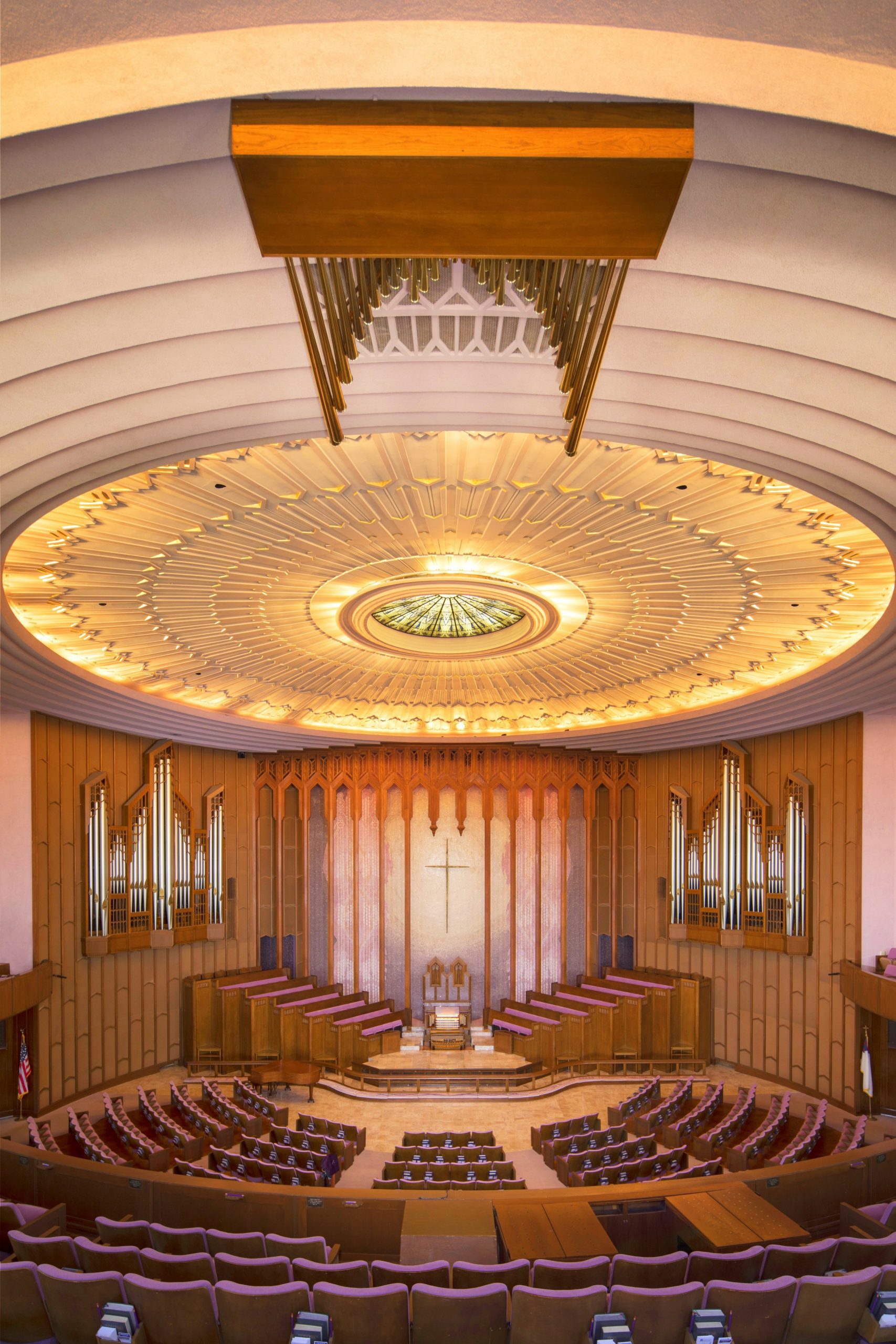
Boston Avenue Methodist Church opened in 1929 and indeed, was meant to look as strikingly strong and elegant as it does. The interior is very large with meeting rooms and offices everywhere, including the senior pastor’s office at the top of the tower. The focal point is the 1,358 seat sanctuary-in-the-round accessed by a spectacular narthex. Everything is an Art Deco paradise.
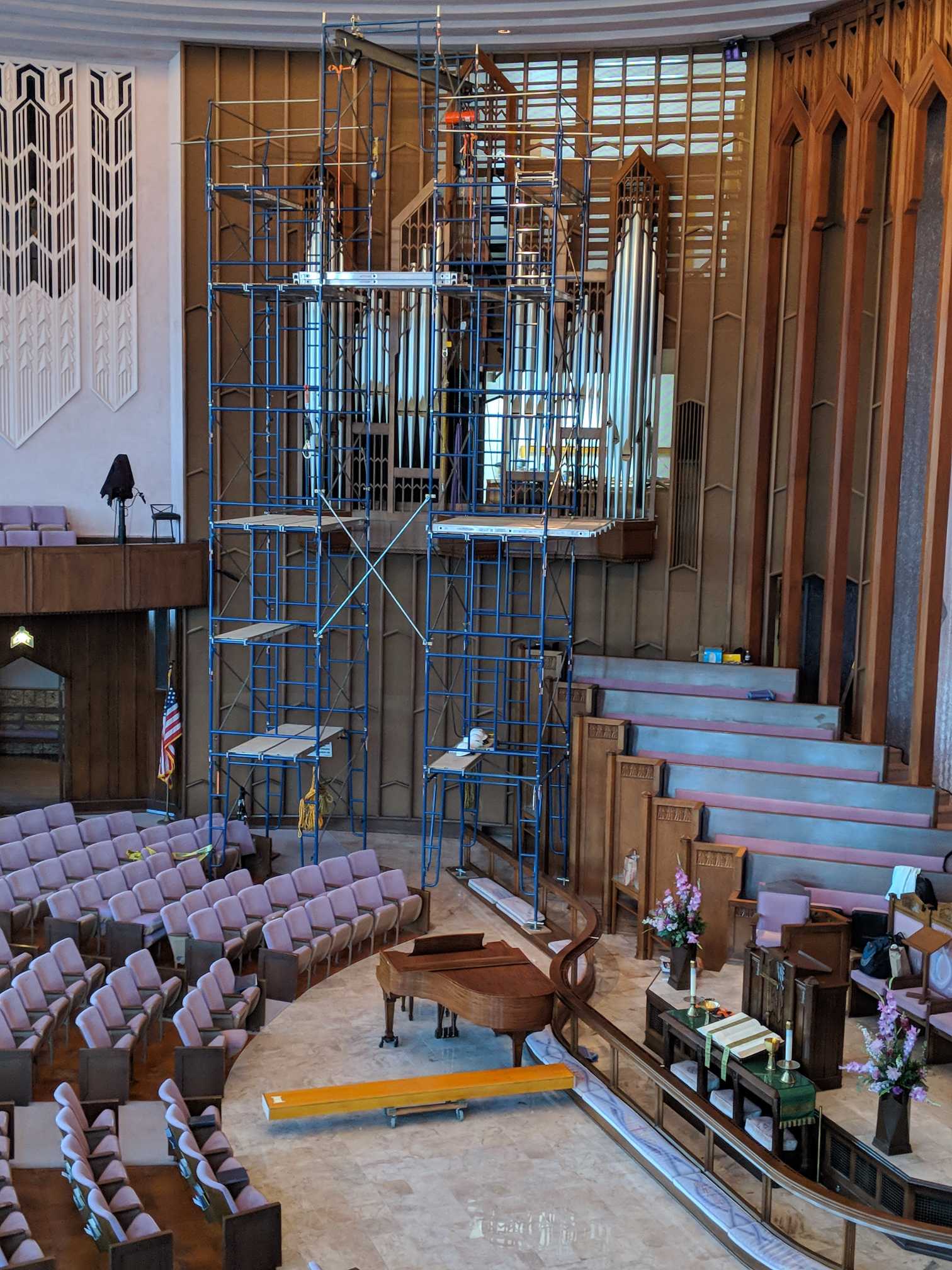
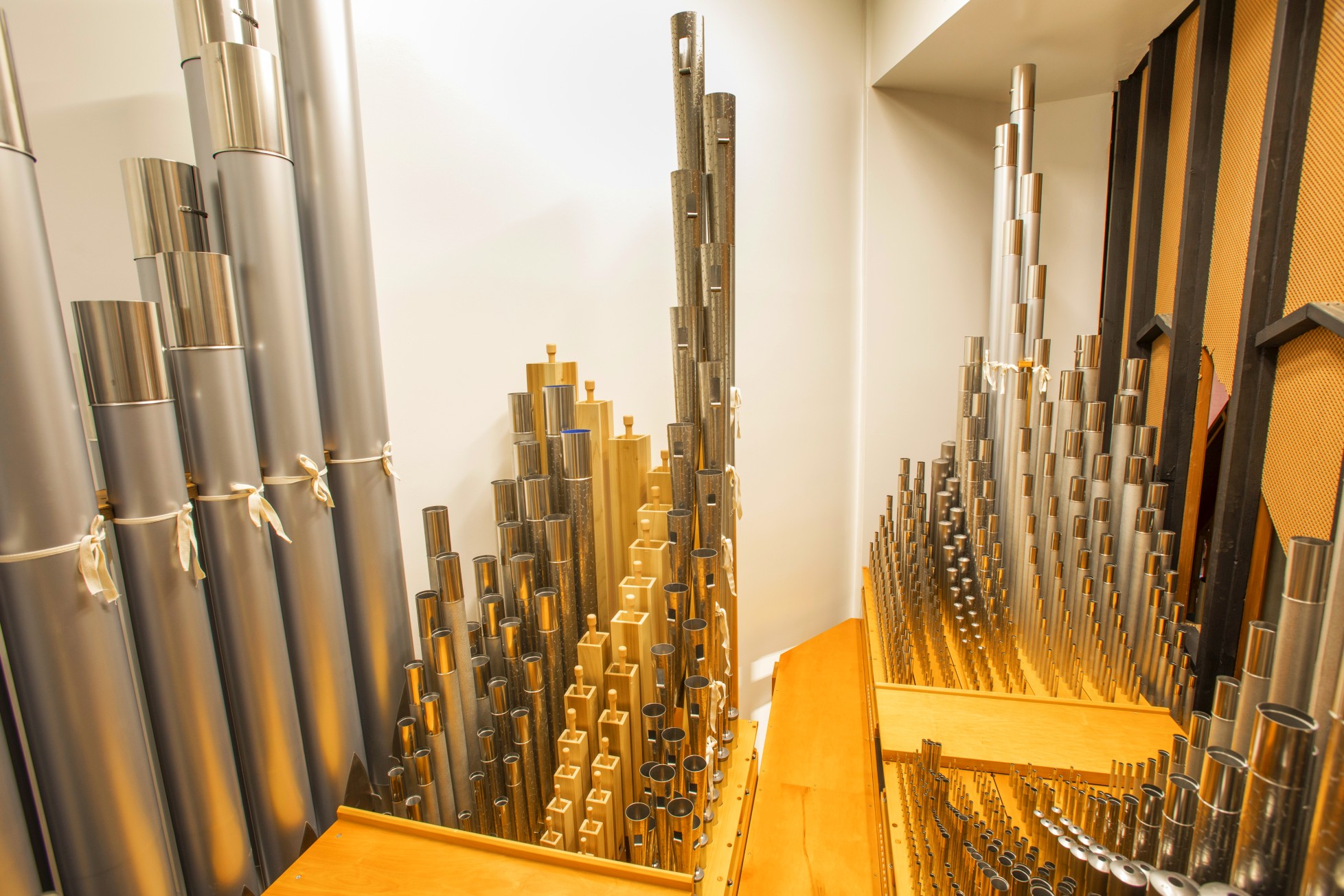
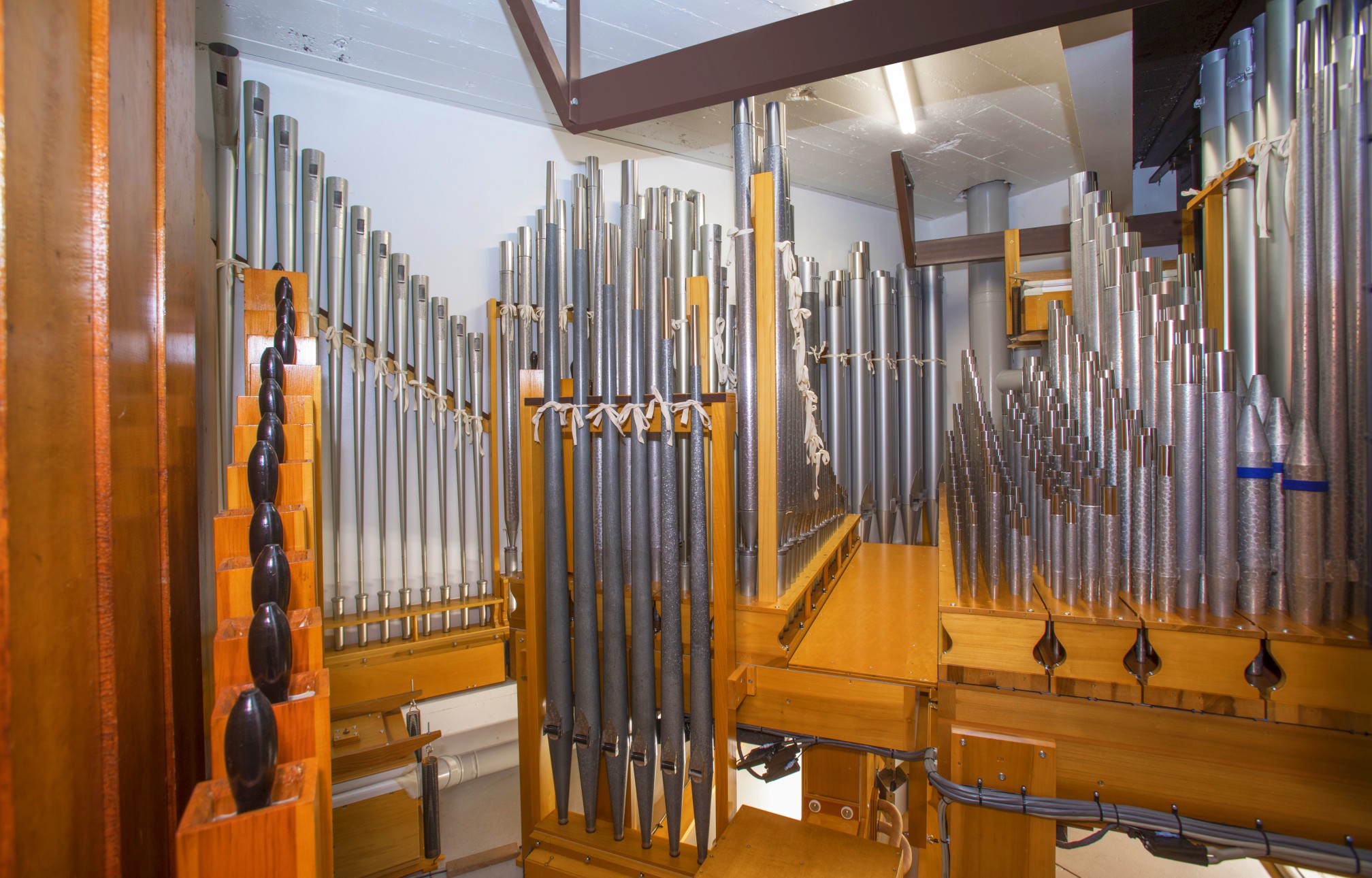
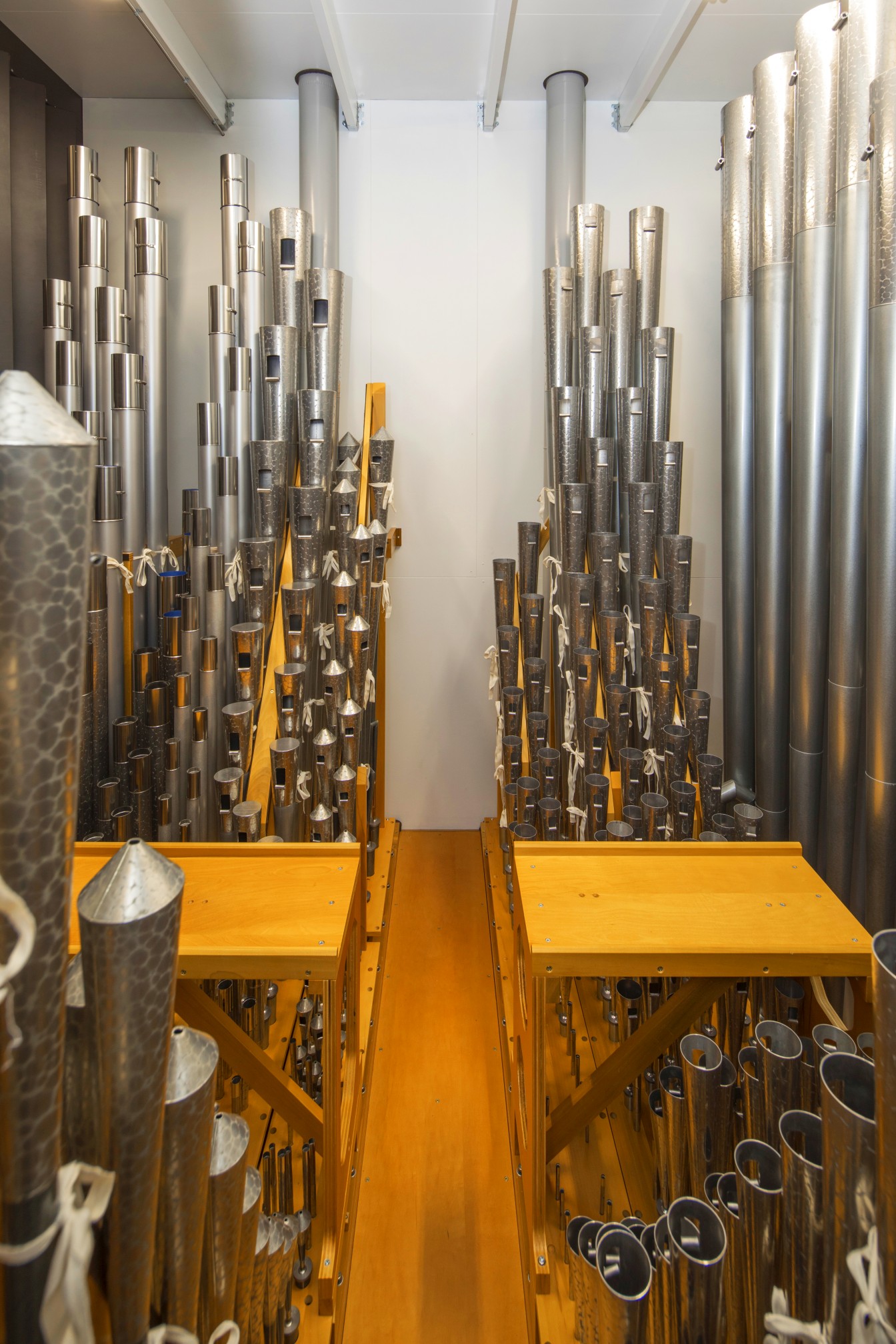
Kilgen was contracted to install the original IV/51 organ in the four chambers located to the left and right of the choir pews. In traditional settings, this would be a typical arrangement, but, the wide, theatre-like sanctuary meant that chambers were considerably separated. Despite being hidden behind heavy plaster grilles, with its big scales and high pressures the Kilgen was doubtless, a heavy sound. It all went away in 1961 when the church purchased Moller #9580, a IV/71. Nearly a knee jerk reaction to the sound of the Kilgen, the Moller was well built but typical for the ‘60’s… low pressures, thin and brilliant. In 1986, Moller returned to broaden the sound. This added another 34 ranks. The work also saw half the chamber’s and their openings enlarged. Their restrictive grilles were replaced with new facades thereby allowing the larger specification as well as improved tonal egress. The added stops did indeed broaden the tonal palette, but the process left the chambers so stuffed that the layouts were a cacophony of pipes, chests, wind lines and wires. Plain and simple, they looked more like Grandma’s attic. Tuning access was difficult, service was in places impossible.
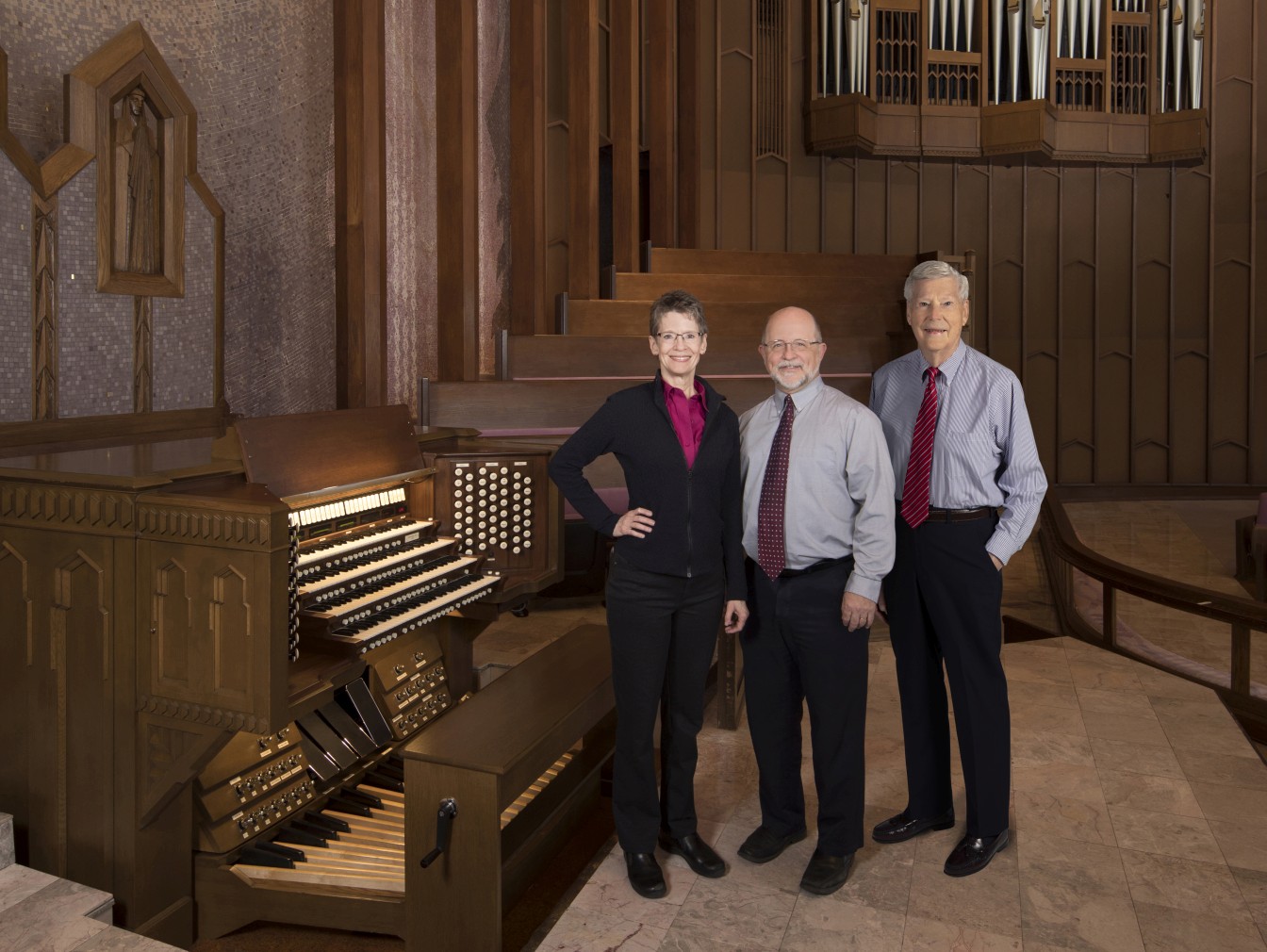
During a major project on the Austin at Tulsa’s First Presbyterian Church, their organist, Ron Pearson, introduced us to Susan and Joel Panciera, the music team at Boston Avenue, and Fred Elder, a much informed and interested retired BAM organist. Shortly after, we began including the organ in our tuning rounds. This gave us good opportunity to get familiar with both its strengths and weaknesses. In time, we were asked to present a plan to rebuild the instrument. This would be no small task.
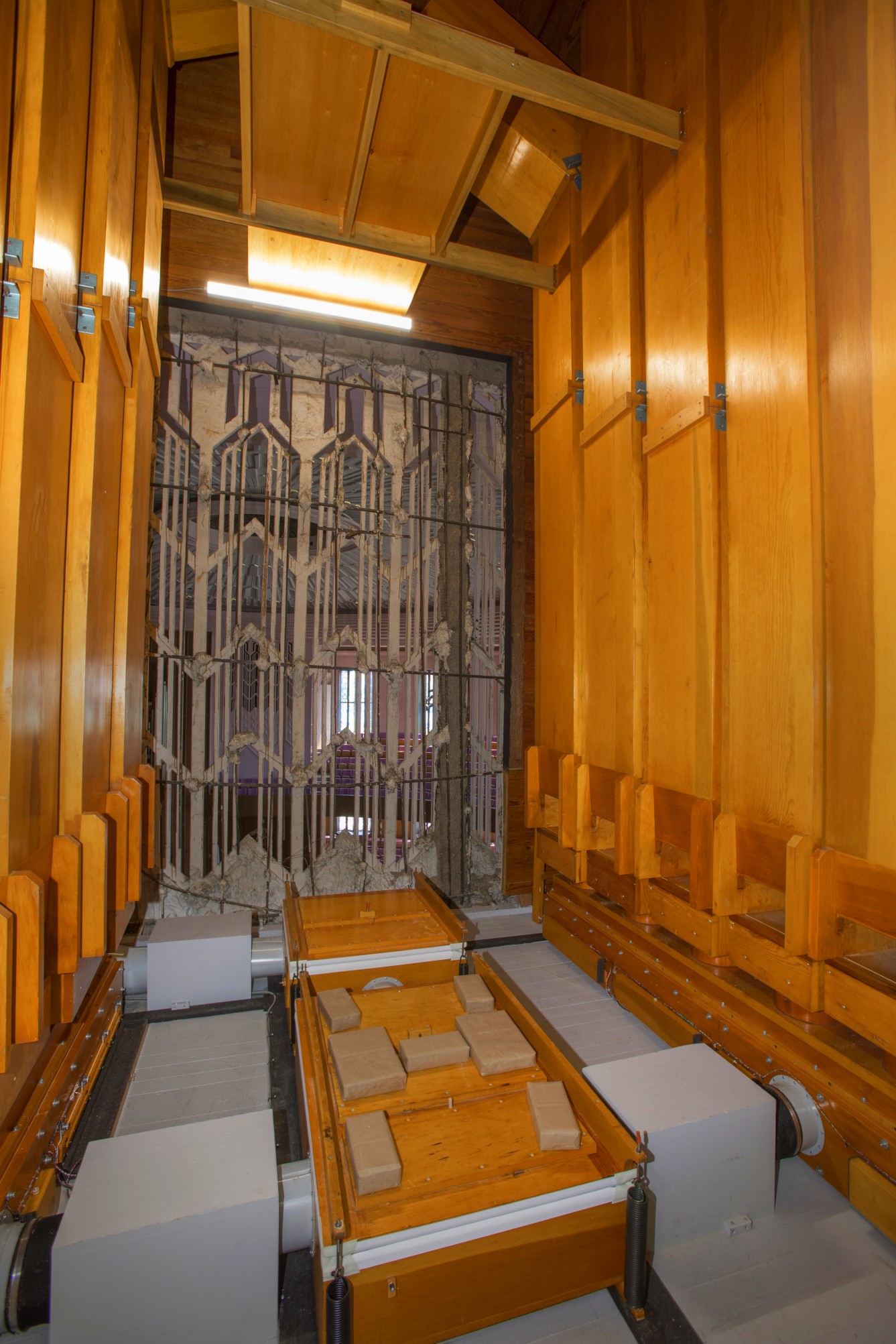
There was no changing the chamber placements or improving the sanctuary’s dry acoustic. Something that could be tackled were the chamber wall surfaces. Dating from the Kilgen’s time, instead of projecting sound out, these soft, wood walls instead absorbed and held sound in. Everything from Bass to Treble suffered. Even swell shade effectiveness was compromised. Therefore, right after we’d removed the organ, the project started with the church’s contractor stiffening the walls, covering every surface with sheetrock, finished glass-smooth and painted gloss white. It worked! Whispers within them became audible most anywhere in the sanctuary. For the first time in the church’s history, these chambers would properly project sound. Excitement grew.
Over the years, the organ had grown to an unwieldy 105 ranks, some of which were redundant stops, and others which the organists admitted were seldom used. We determined early on that the existing chambers were more suited for a smaller instrument. Our design therefore reduced the total count to 76 all-important ranks. Each was carefully spec’d or—if reused-- selected to achieve the best possible tonal cohesion…the two words that determine the tonal success of any instrument.
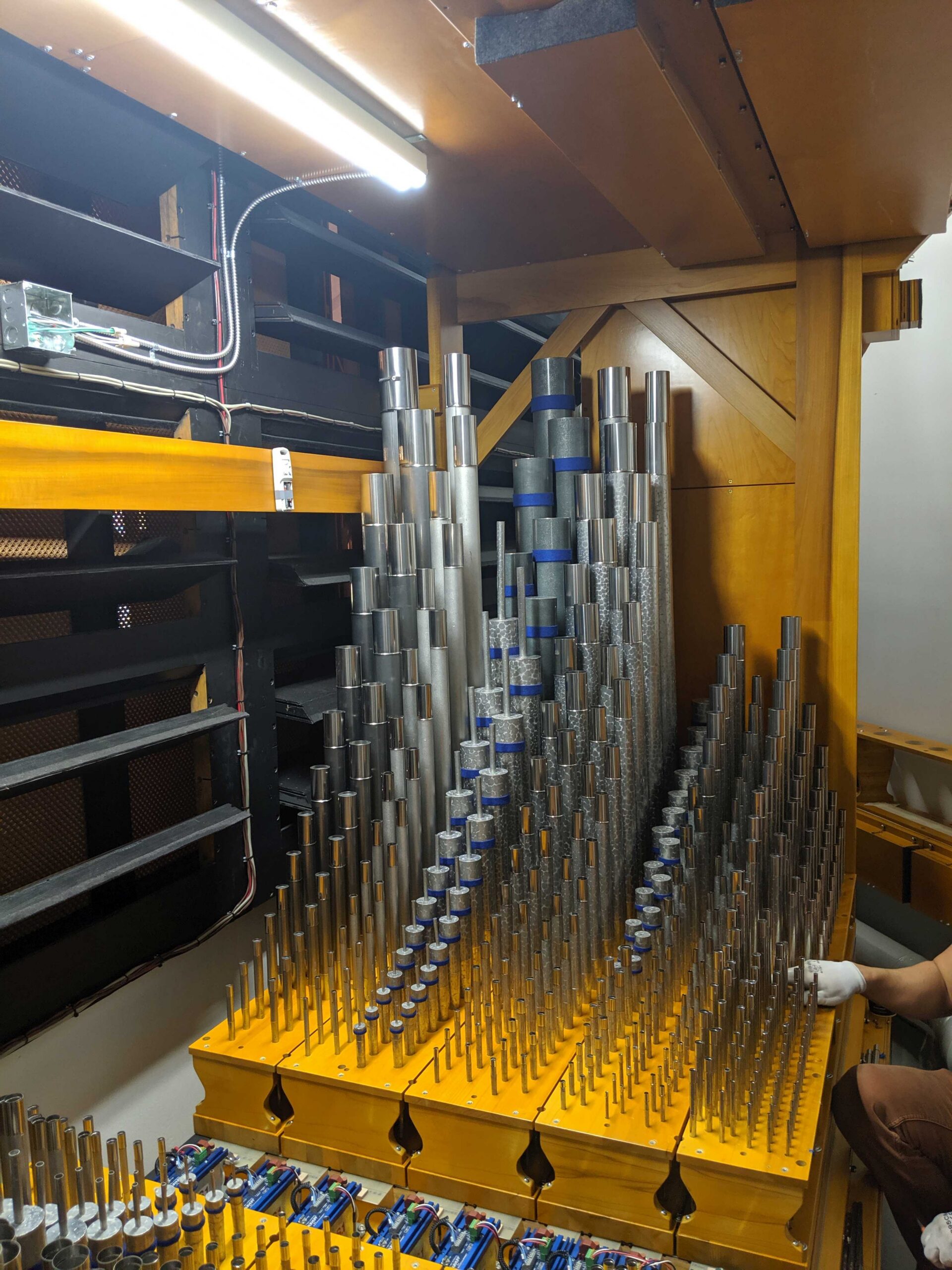
Mechanically, new slider chests replaced Moller’s leather-heavy Pitmans. Simple Schwimmer reservoirs saw over half of Moller’s 31 bellows go away, clearing the decks for new and proper layouts that made for a well laid out and serviceable organ. The annoying pitch-drift that existed between divisions was tackled with all-new insulation behind the chamber walls and ceilings. Especially subject to drift were the many speaking façade pipes, as the temperatures surrounding them outside the chambers were often different from those inside. Roomier chambers saw the facades become mute and their new replacement pipes installed inside, within their divisions. Voila! No more pitch drift.
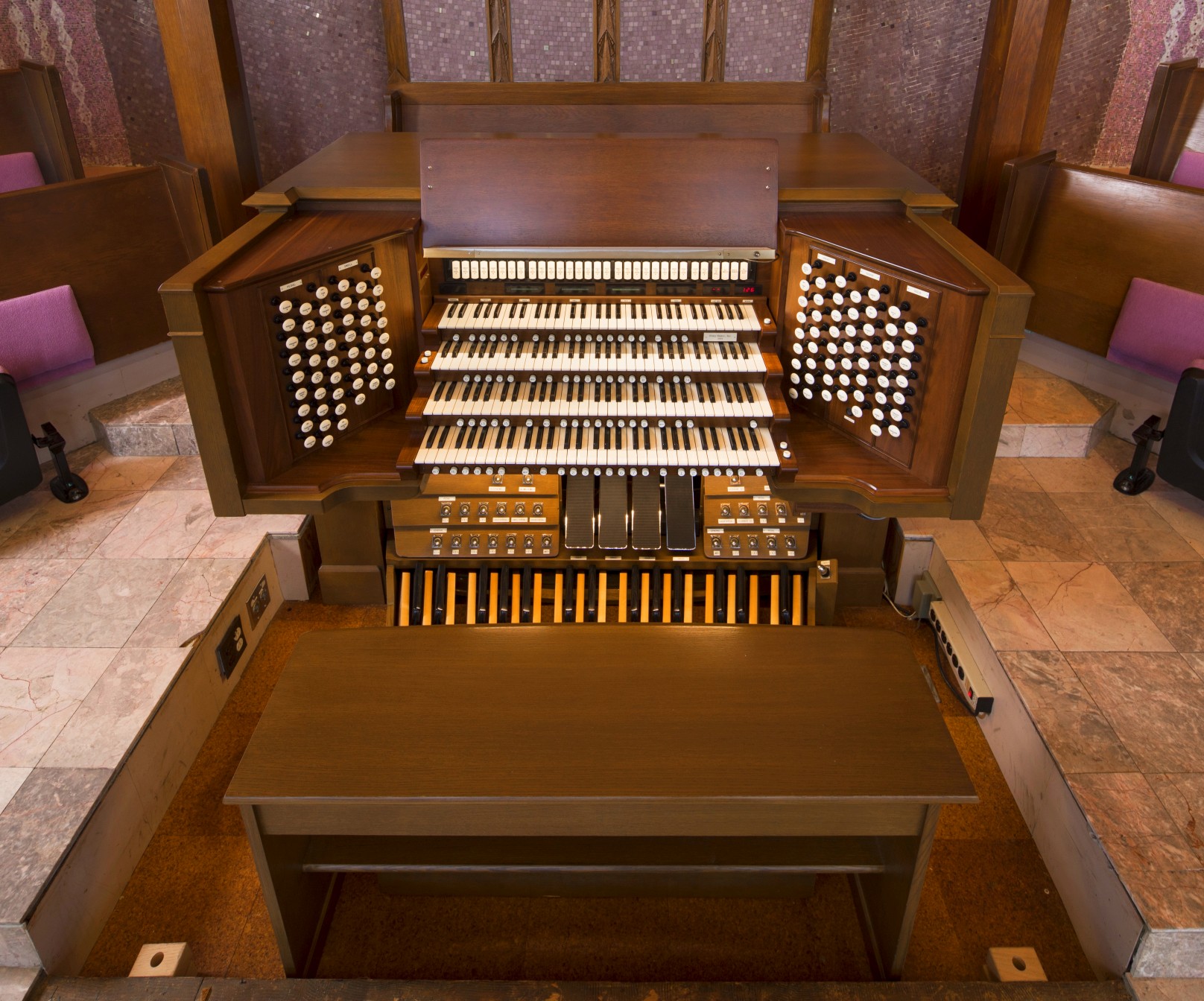
The console was gutted to the shell. New manuals, pistons, jambs and a proper line up of draw knobs makes for a most welcome and new level of comfort for the organist. Updating and reusing the recently installed Peterson relay system offered good savings. The console was refinished with new contrasting colors and a new adjustable height bench.
The 1929, 15 horsepower Spencer Blower was completely reconditioned and reused, as was the original static reservoir. Air lines were cleaned and flanges regasketed. The rebuilt instrument uses soldered, galvanized metal wind lines throughout.
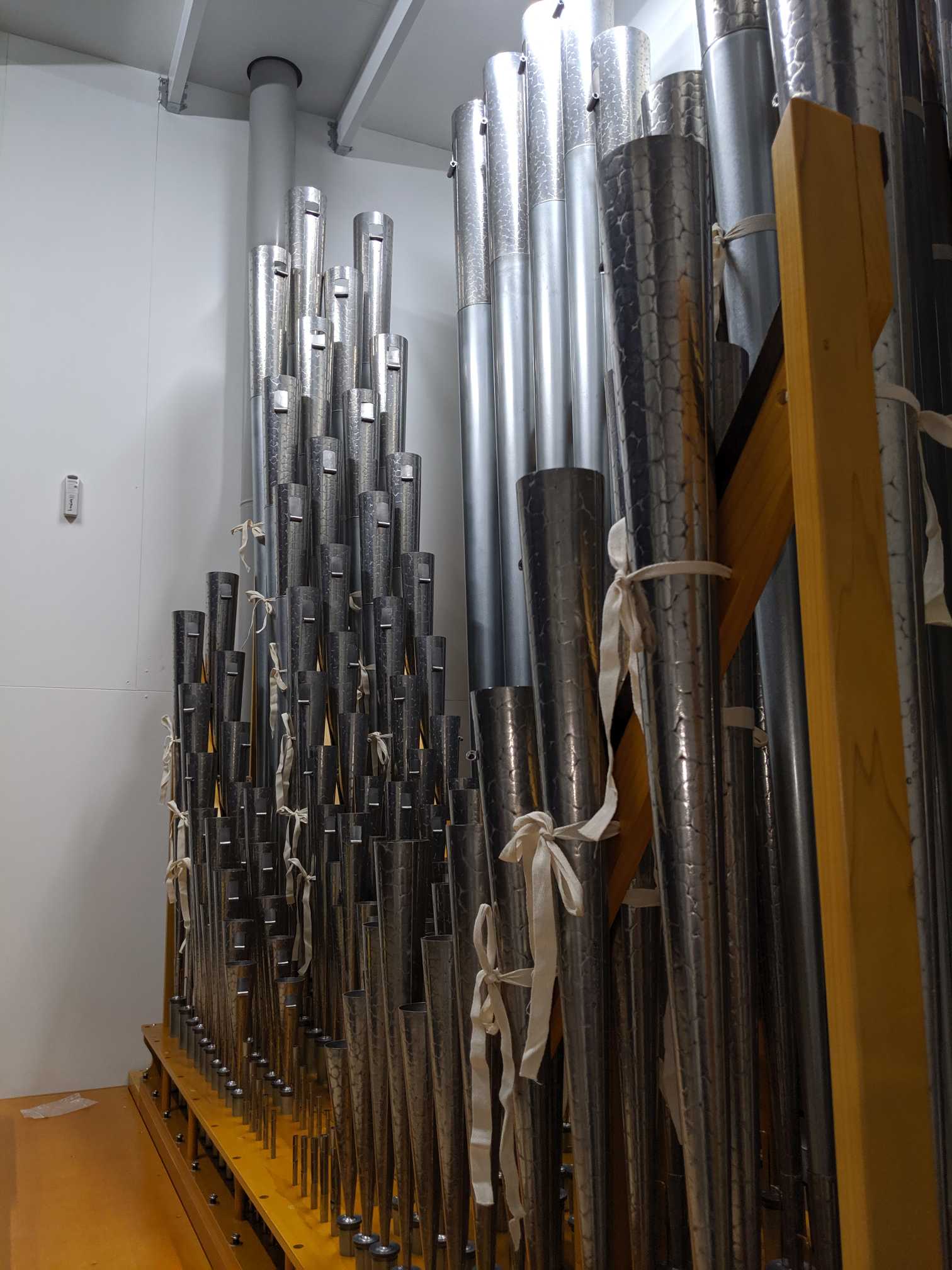
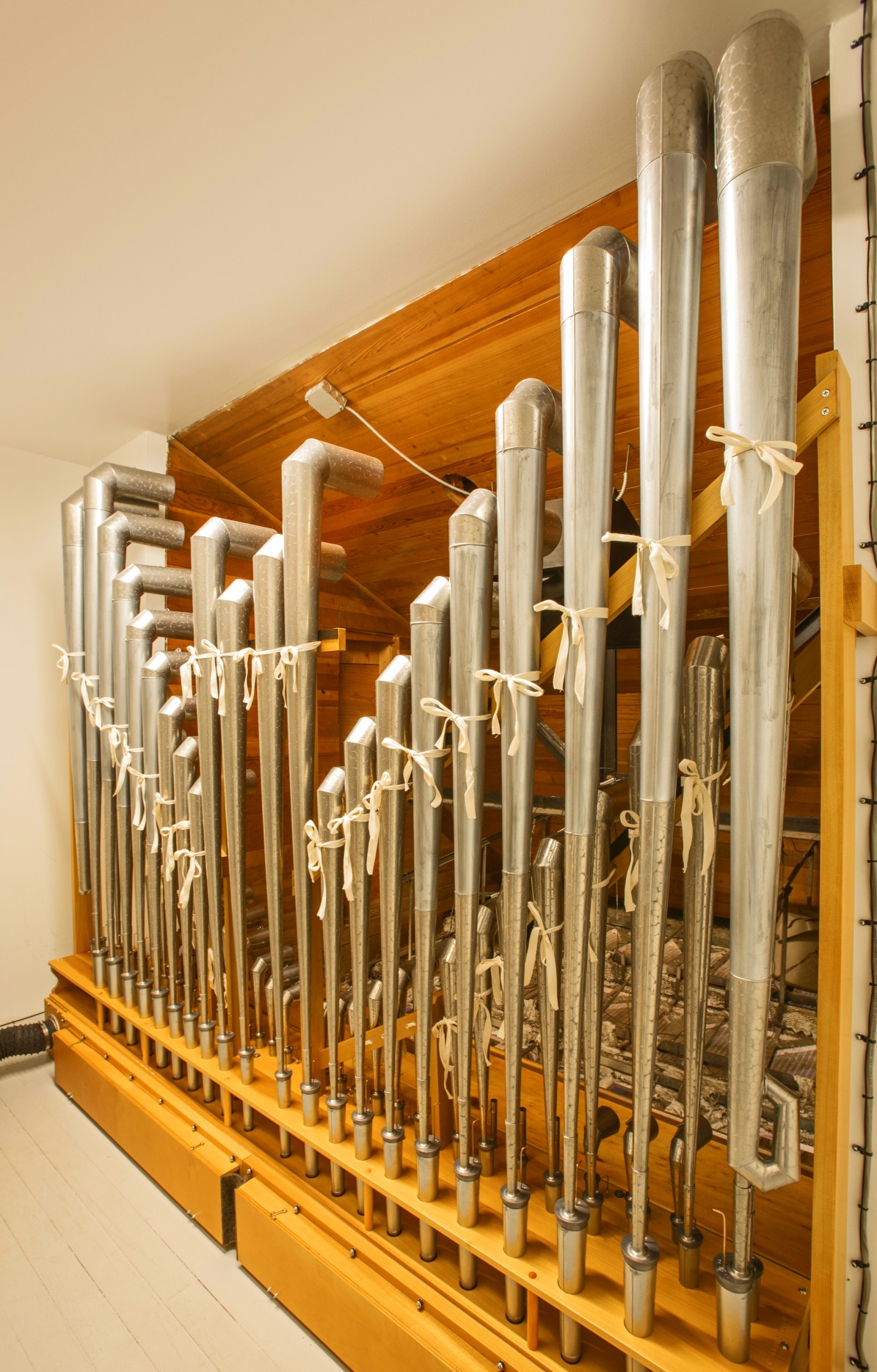
Every piece of reused equipment was completely reconditioned. Every piece of leather was replaced. Every flue pipe was washed/cleaned, repaired as necessary and revoiced on our voicing machines. Any cracks in wood pipes were spline repaired. Reeds were all reconditioned by Broome and Company.
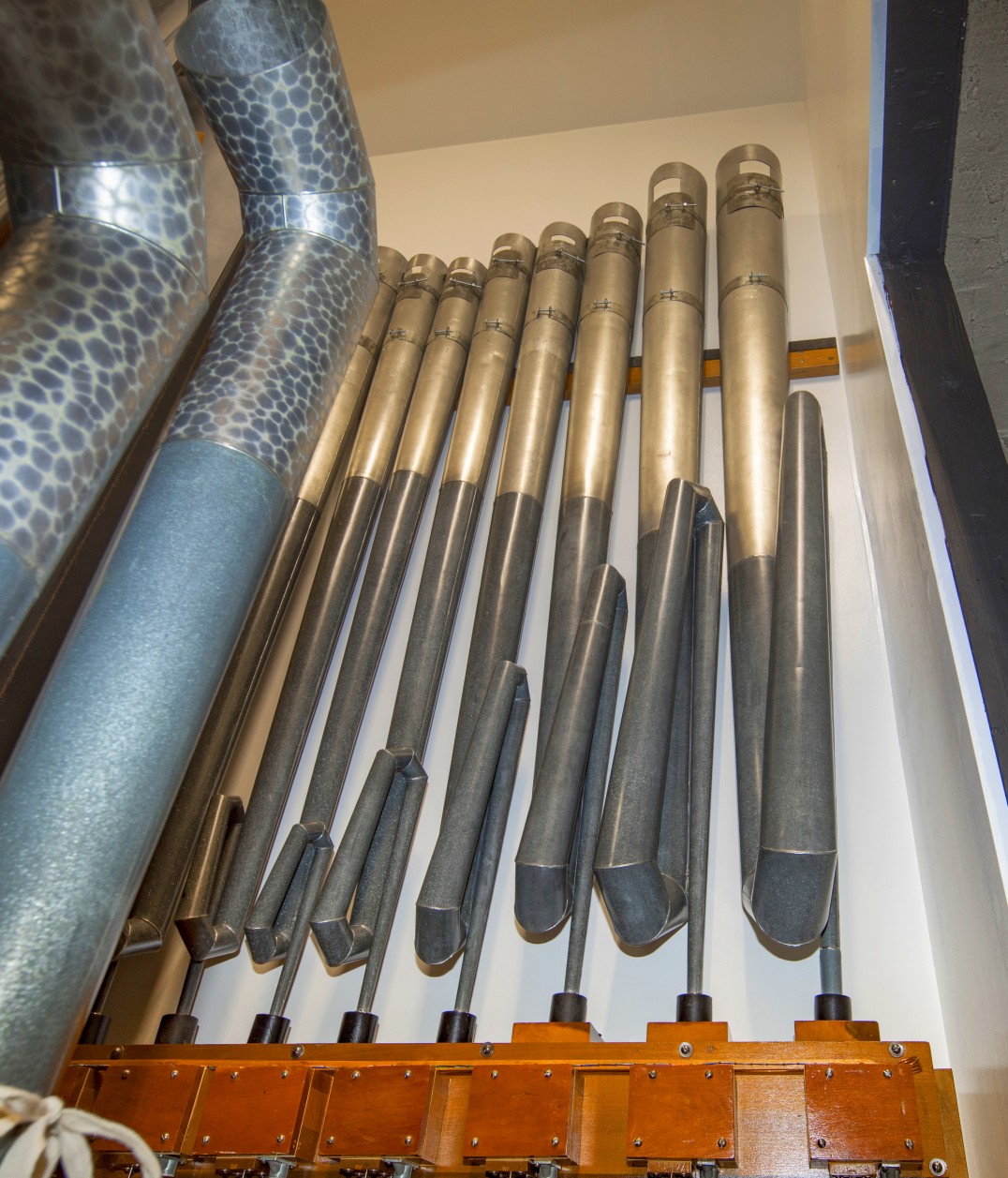
Regardless of how perfectly an organ looks and works, in the end, it all comes down to the organ’s sound. As always, we were proud to offer that our tonal director, Milovan Popovic, had once more spun his magic and come up with what is without question the first and most important ingredient: a musical organ. It becomes obvious the moment organists try their hand. Most seem to feel the organ makes the most from whatever they play. This medium to large sized instrument offers fully three Principal Choruses, three different sets of strings and a good variety of flutes. The Solo reeds satisfy any melody plus there are two full 16/8/4 reed choruses that build ensembles to massive but musical climaxes. These are capped by the new high-pressure Harmonic Tuba located in the Echo chamber, masked by the now unused en Chamade that was dangerously inaccessible. Thanks to those hard chambers, the organ’s bass purrs or roars. The room’s floor can actually be felt shaking. The Wurlitzer small scale Diaphone sits always in the background but instantly, albeit gently, pushing any 16’ pedal tone.
Installation was completed in December 2019, and tonal finishing was completed in February 2020.
Let’s Preserve Your Pipe Organ
Whether you are planning a reconditioning or addressing tuning and mechanical issues, Foley-Baker provides expert guidance from assessment through completion. We'd love to hear from you.