
Welte-Tripp Opus 258
The Welte name is mostly known for its roll-player mechanisms, the Mignon reproducing piano, and their Orchestrion. However, as builders of traditional pipe organs, Welte’s output was small; organs were but one in a family of Welte “products” typical of the era’s massive instrumental output. In 1912, Welte opened a factory in Poughkeepsie, NY, but their earliest organs were purchased from other builders and fitted with Welte players. Being of German ownership, the First World War threw things into disarray, and after the war, ownership changed hands. A larger reorganization in 1925 by former Kimball man Robert Pier Elliot had Welte building its own organs of fine quality and for any venue: residence, theater or church. But the firm struggled to gain a strong financial footing. It suffered a setback in 1927, repurchase and relocation in 1929, and finally absorption by Kimball of Chicago in 1931. Today, there are few surviving examples of Welte organs, and, even after our 42 years in business, we had never worked on one. St. Mark’s Minneapolis would be a new experience.
The Cathedral’s consultant was David Engen of Maple Grove Minnesota. His RFP offered a general description of the organ’s overall condition. Our assumption was that we would see huge Diapasons, pencil-scale strings and tibia-like flutes, all on a massive chassis. In fact, the St. Marks’ Welte had been tonally and mechanically modified on two different occasions by M.P. Möller. Much of the Welte material was long gone, although the organ remained capable of producing an impressive volume of sound.
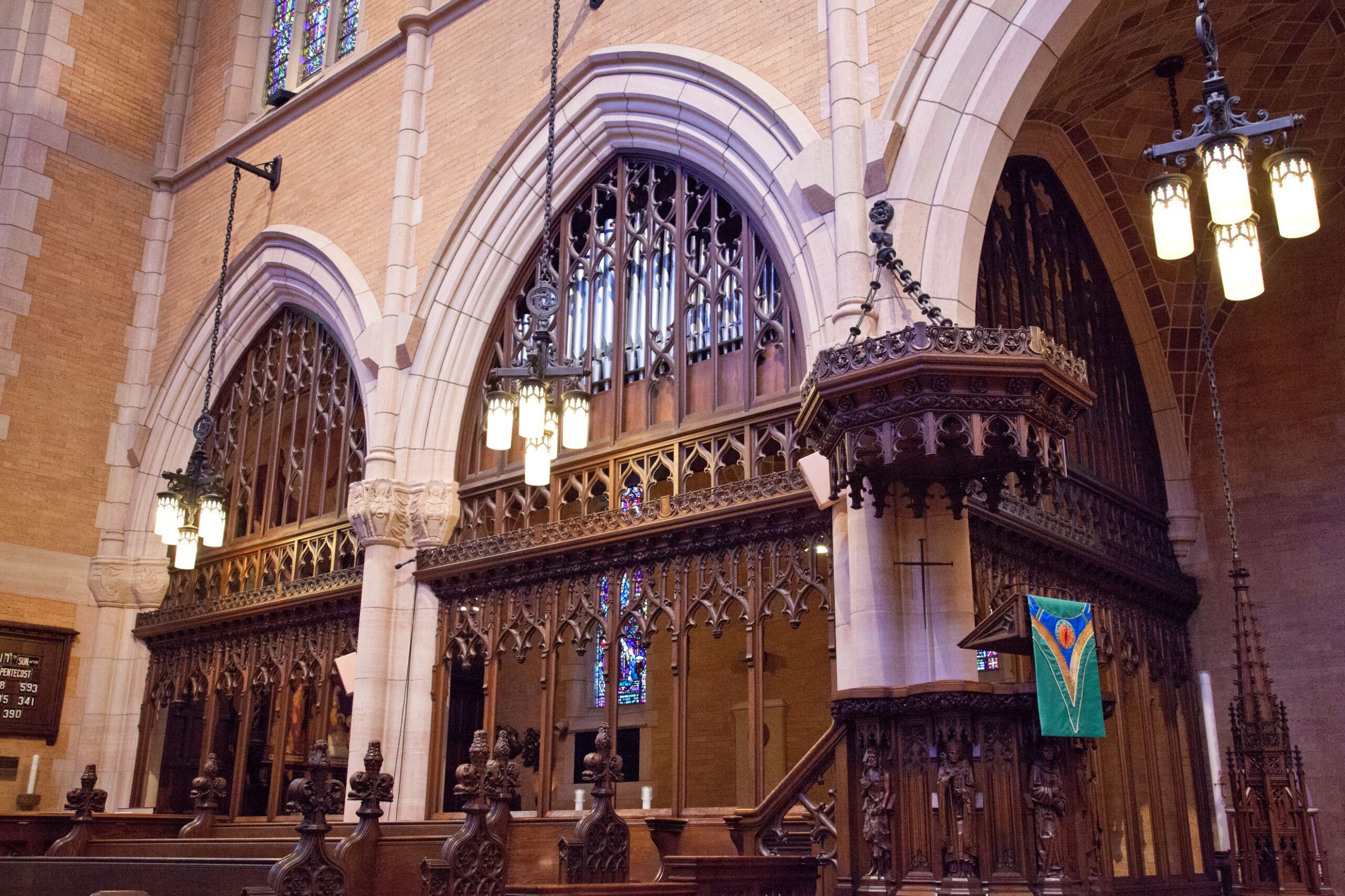
But it was clear the various rebuilds had compromised the instrument. The chamber was packed with non-Welte chests, flexible wind lines, dangling wires and a chamber entrance door that barely opened, due to added ranks and equipment. There were reservoirs everywhere, fully seventeen in the main organ. Tuning access was bad enough, while actual service work required unnecessarily heroic effort. One reason the organ continued to generate an impressive sound was the chamber’s placement and hard walls. More than projecting sound, the chamber almost seemed to amplify it. The Cathedral’s impressive acoustics certainly helped as well.
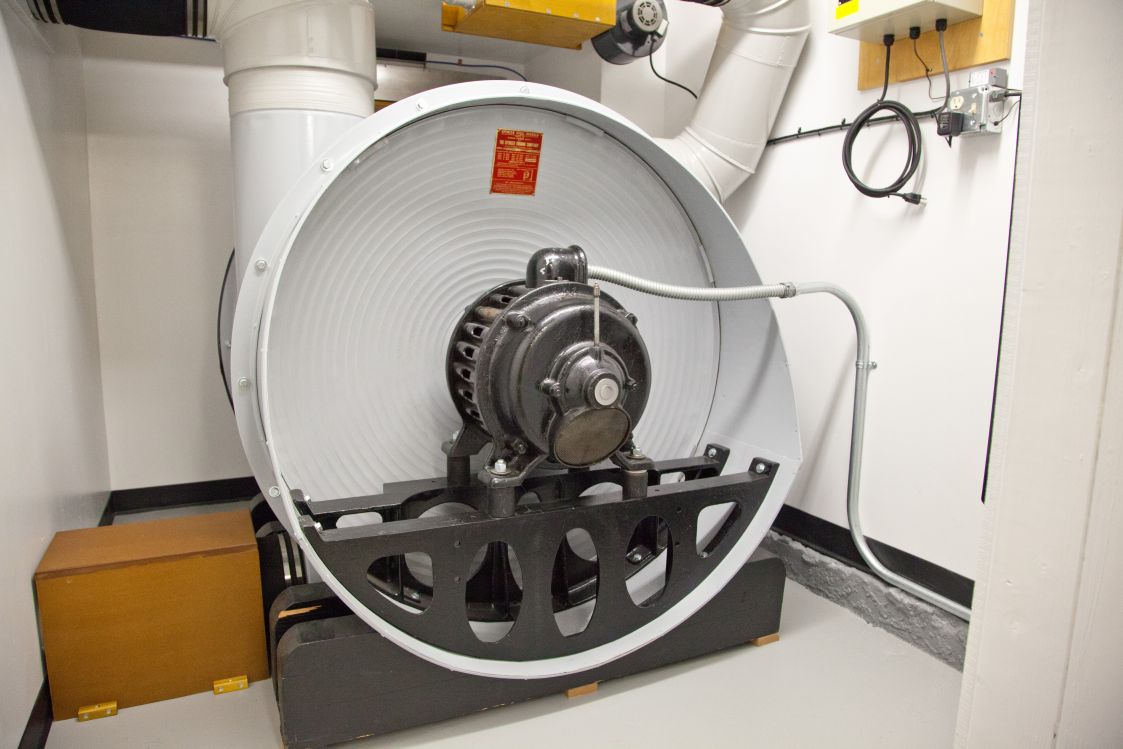
The organ was on its third console and had a dated relay system spread throughout four different areas of the building. In the basement, the large Spencer blower’s motor needed all new bearings. Adding insult to injury, HVAC ducts installed in the 1950s had seen the removal of the organ’s important static reservoirs, further compromising the wind supply.
At Foley-Baker, we love to save old organs. However, it was clear that at St. Mark’s, there wasn’t an old organ to save, just parts of one. Trying to determine what was possible and affordable would take both positive and practical thinking. If the organ were to be rebuilt, the results had to be worth the investment.
We spent days measuring pipe scales and gathering details. There were interesting finds, such as high in the tower where the Möller crew had stored some of the 1928 Welte pipework. There was much damage; some ranks were incomplete, while others were beyond repair. Our tonal director Milovan Popovic laid out rank after twisted rank on the large tower room floor. Out of this survey we found three Welte stops to reclaim: the Swell 4’ Clarion, Great 8’ Second Open Diapason, and the large-scale Swell 8’ Vox Humana. All three became valuable additions.
As our familiarity with the Cathedral’s music program and organ grew, so did our concepts for the renewed instrument. Tonally, we had 1920s Welte mixed with 1980s Moller. In 2012 it’s perhaps too easy to criticize Möller’s radical changes as heavy-handed; they were in the spirit of the time, and had introduced a variety of useful colors, including mutations, large-scale strings and solo reeds. In time, we decided just where and what reused ranks would work and what new ones had to be added to create a bold, cohesive American sound to fill the Cathedral’s large nave.
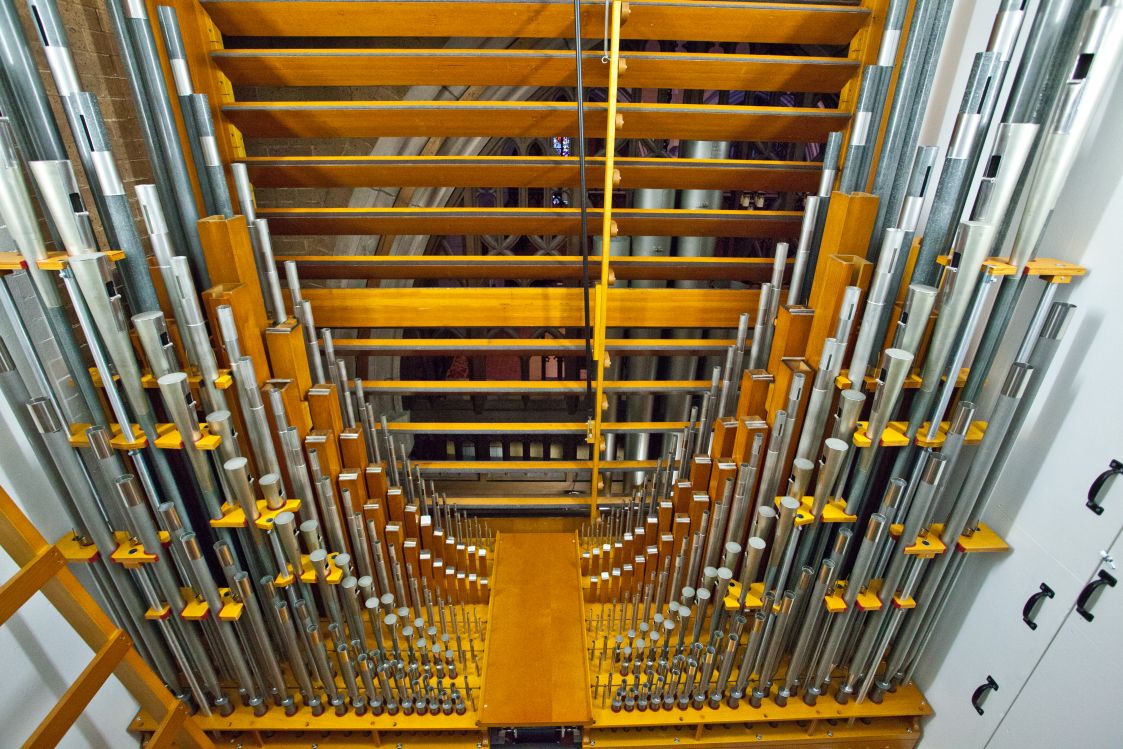
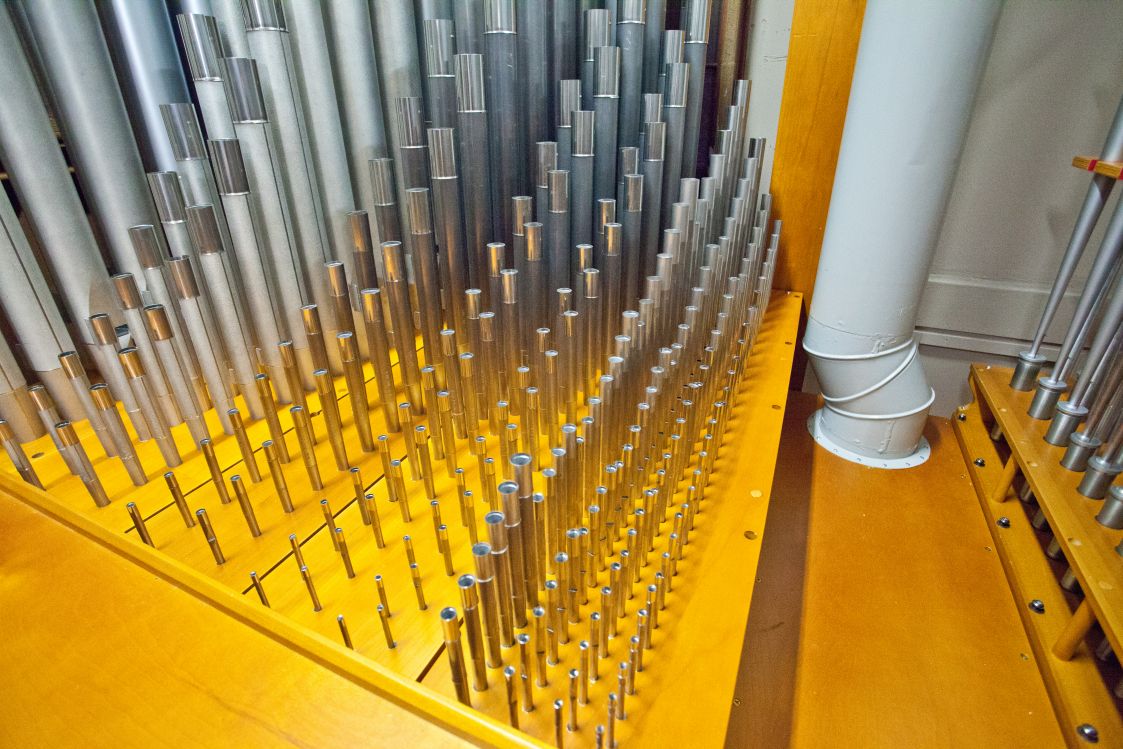
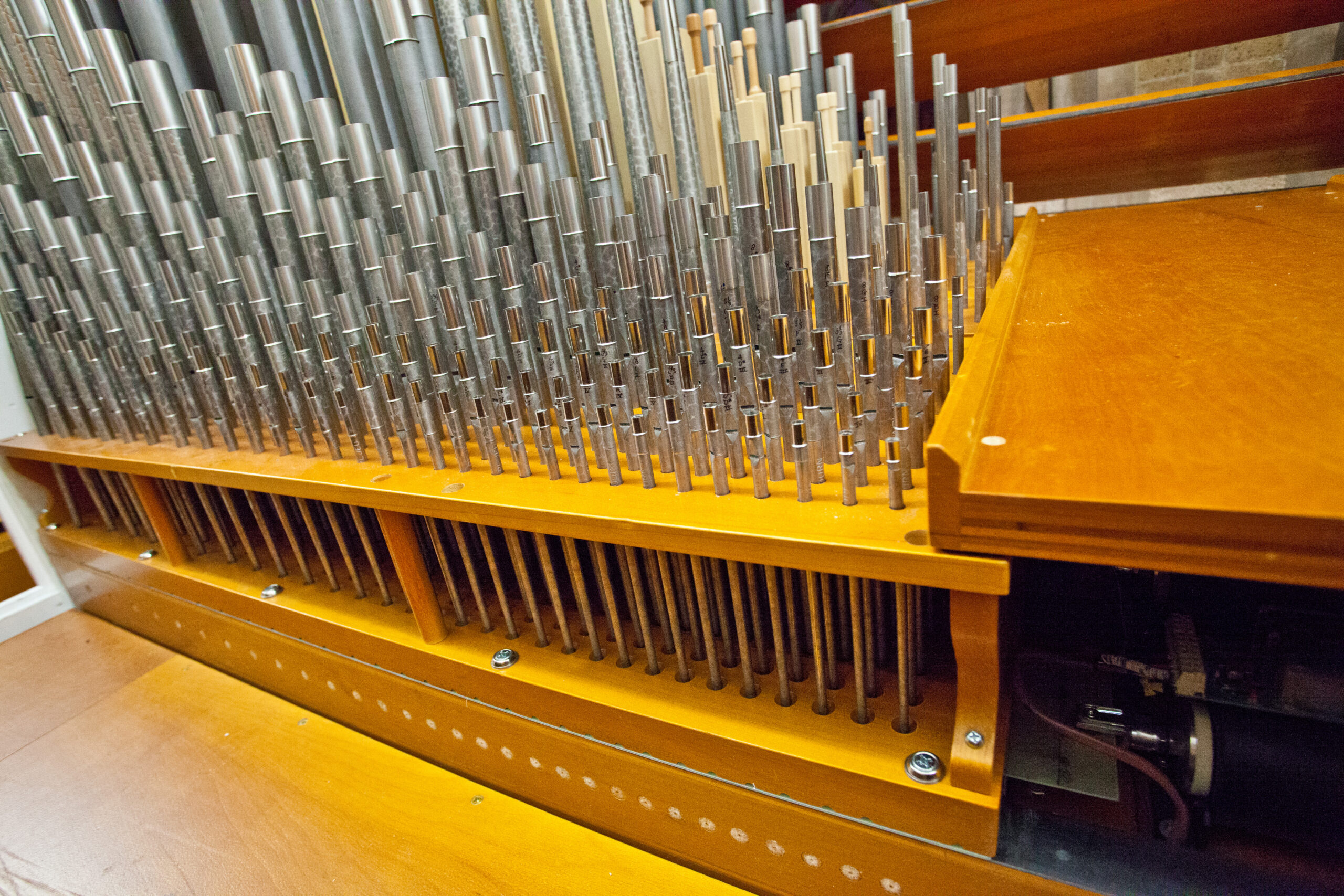
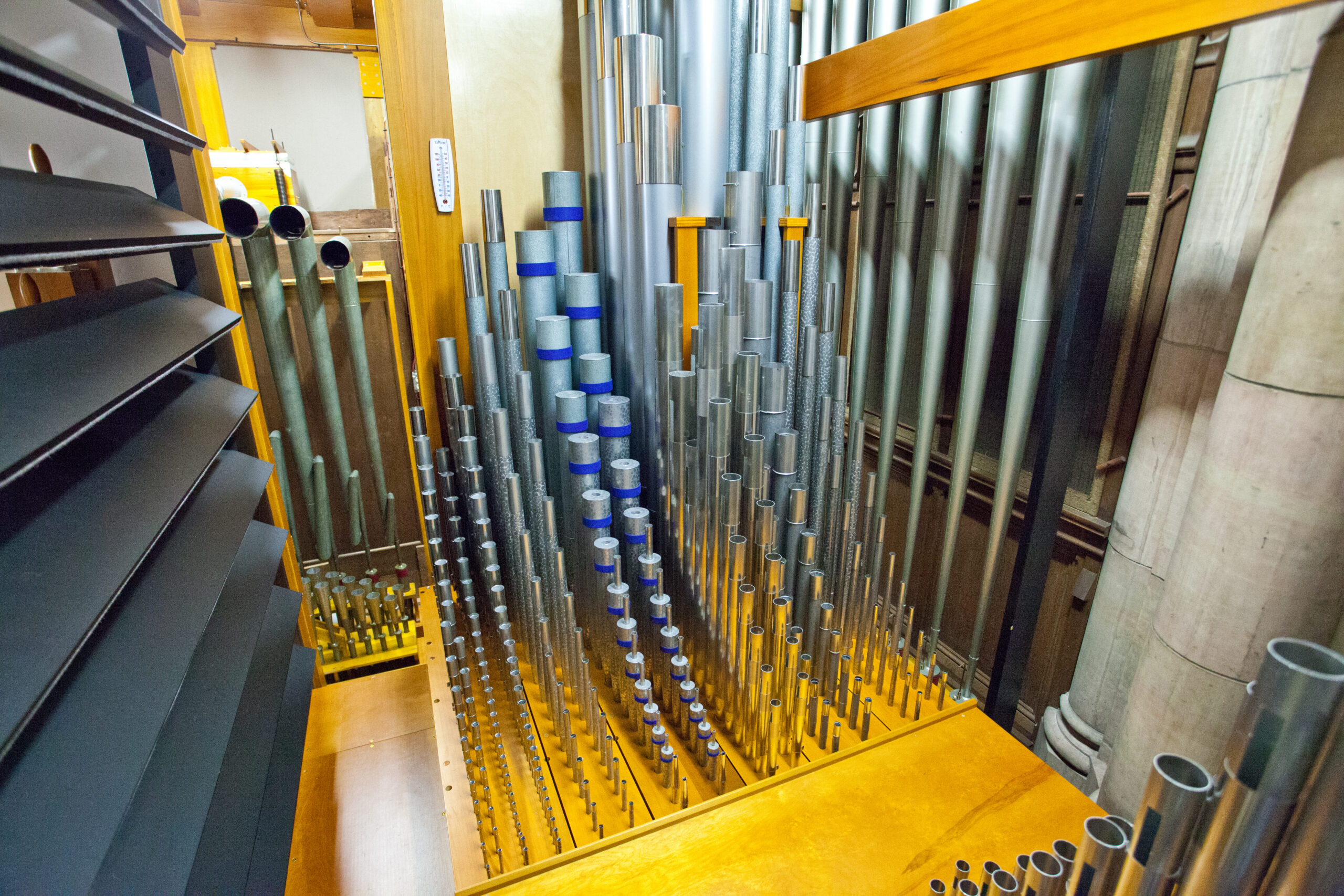
The chamber size and shape dictated the same stacked layout as had existed from the beginning. For us, multi-level organs raise red flags for service accessibility. Without careful design, the new and larger instrument had the potential for being another service nightmare. Our solution was to start from scratch, using a new chassis designed and built at Organ Supply Industries. The elegant simplicity of their slider chests promised minimal maintenance and assurance of accessibility. Their built-in Schwimmer regulators greatly simplified the winding, adding space for more stops and wider passage boards.
Given the scales and pressures, effective swell boxes would be essential. The original Welte shades were rebuilt and fitted to new boxes of 1.5” thick MDF. The combination of the two makes for a marvelous range of expression; massive ensembles can whisper or roar.
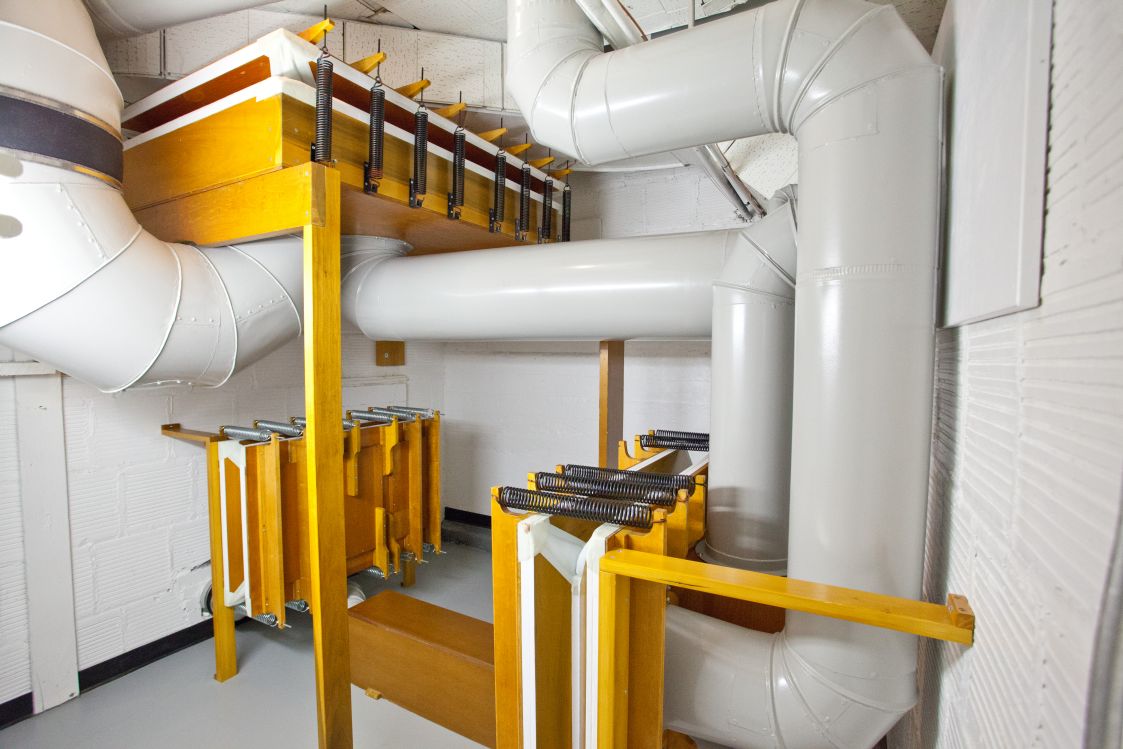
In addition to restoring the 1928 Spencer blower we were able to find and install appropriate static reservoirs. Unlike 1928, however, this equipment now stands in separate rooms dedicated for the purpose. The result is that, despite wind pressures from five to 20 inches, an indicator light is necessary to know that the wind is on. As we have done elsewhere, we designed and installed an automatic, in-chassis humidity system that requires minimal service attention and combats Minnesota’s problematic humidity swings.
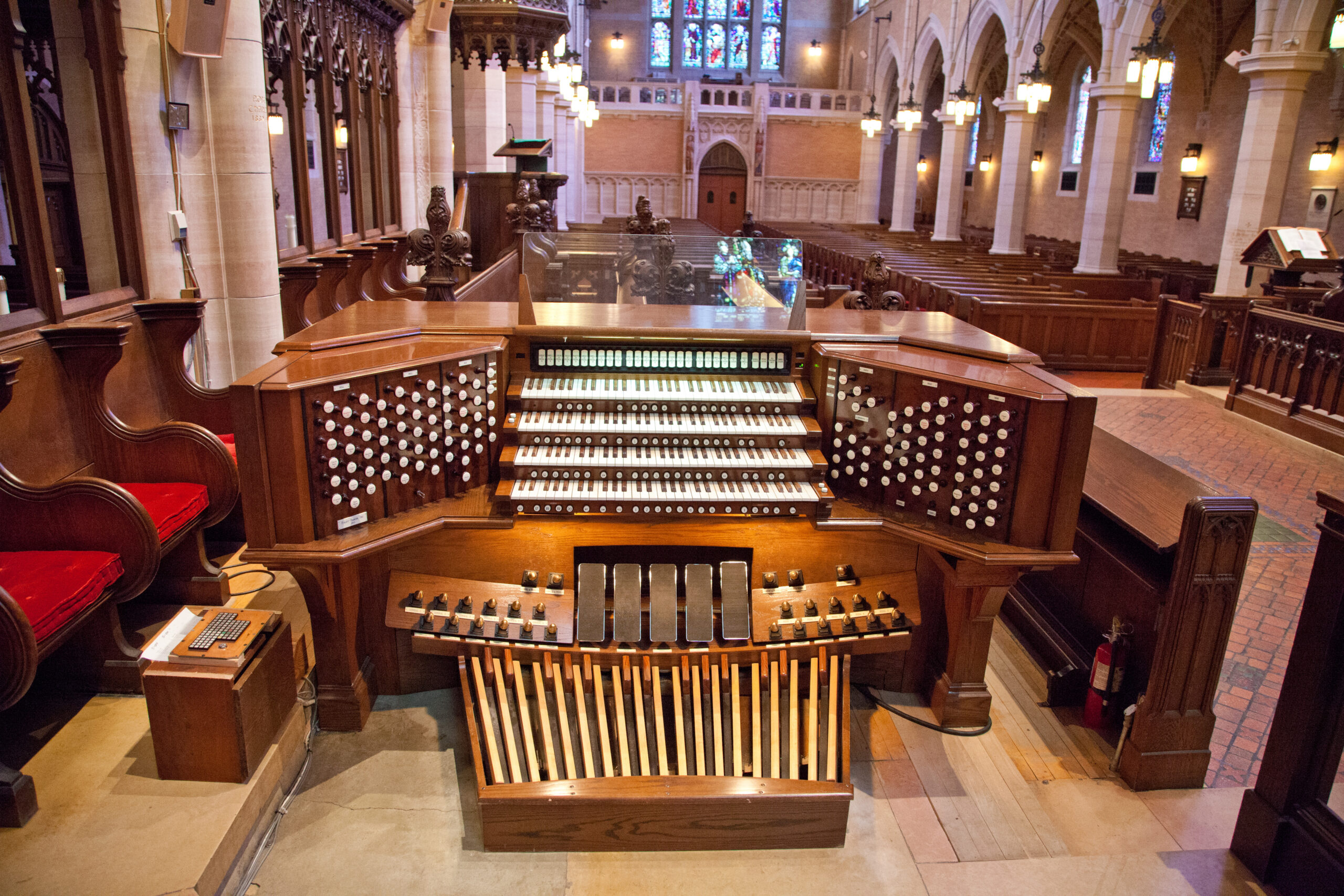
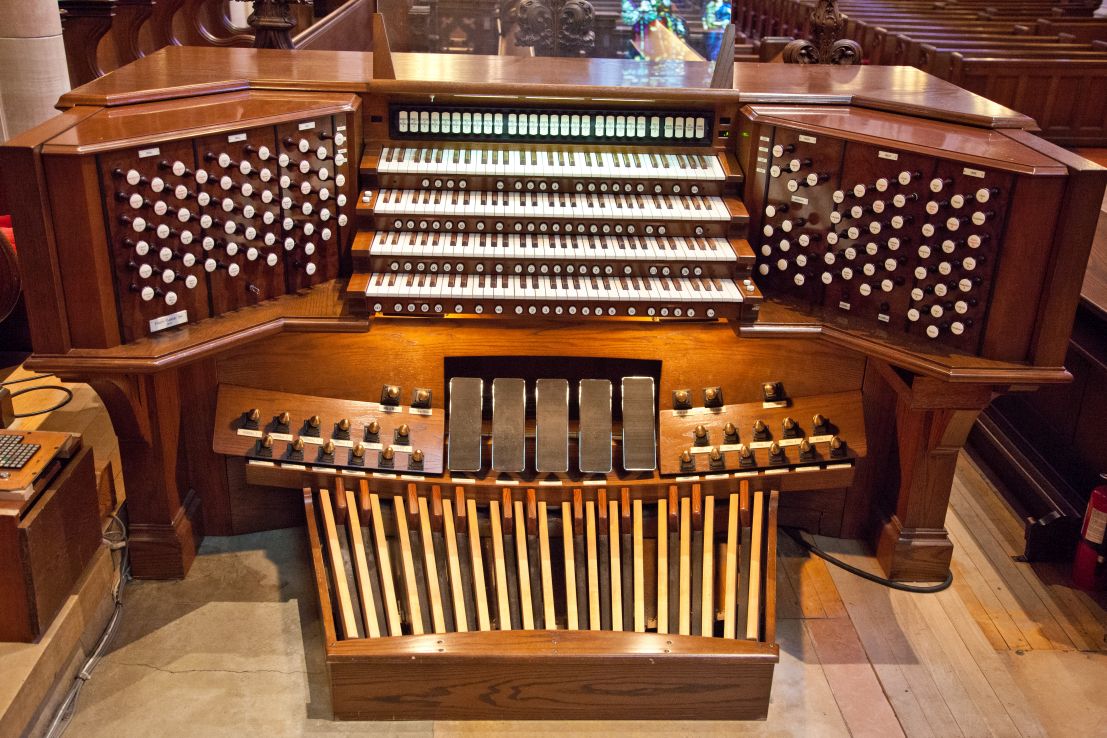
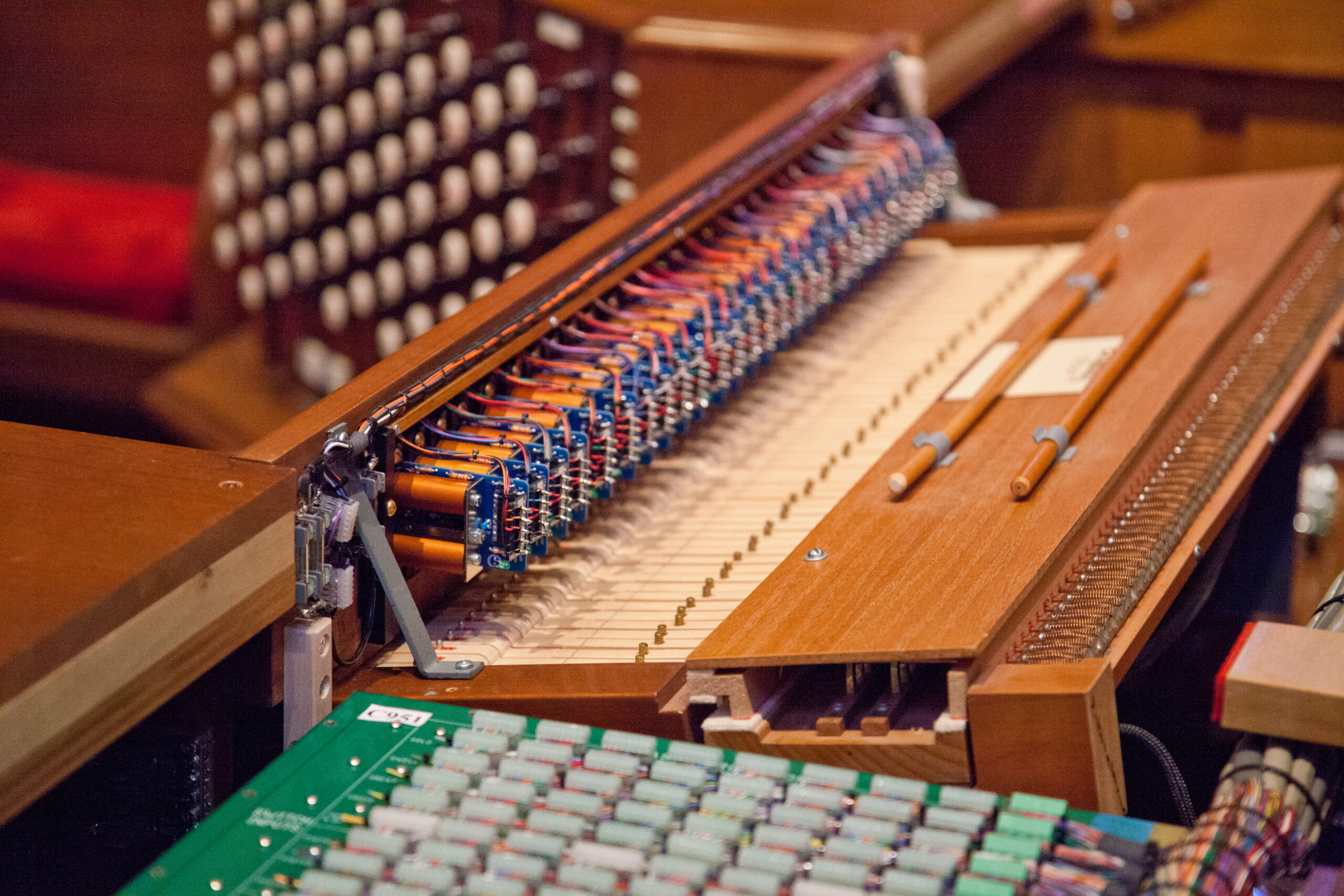
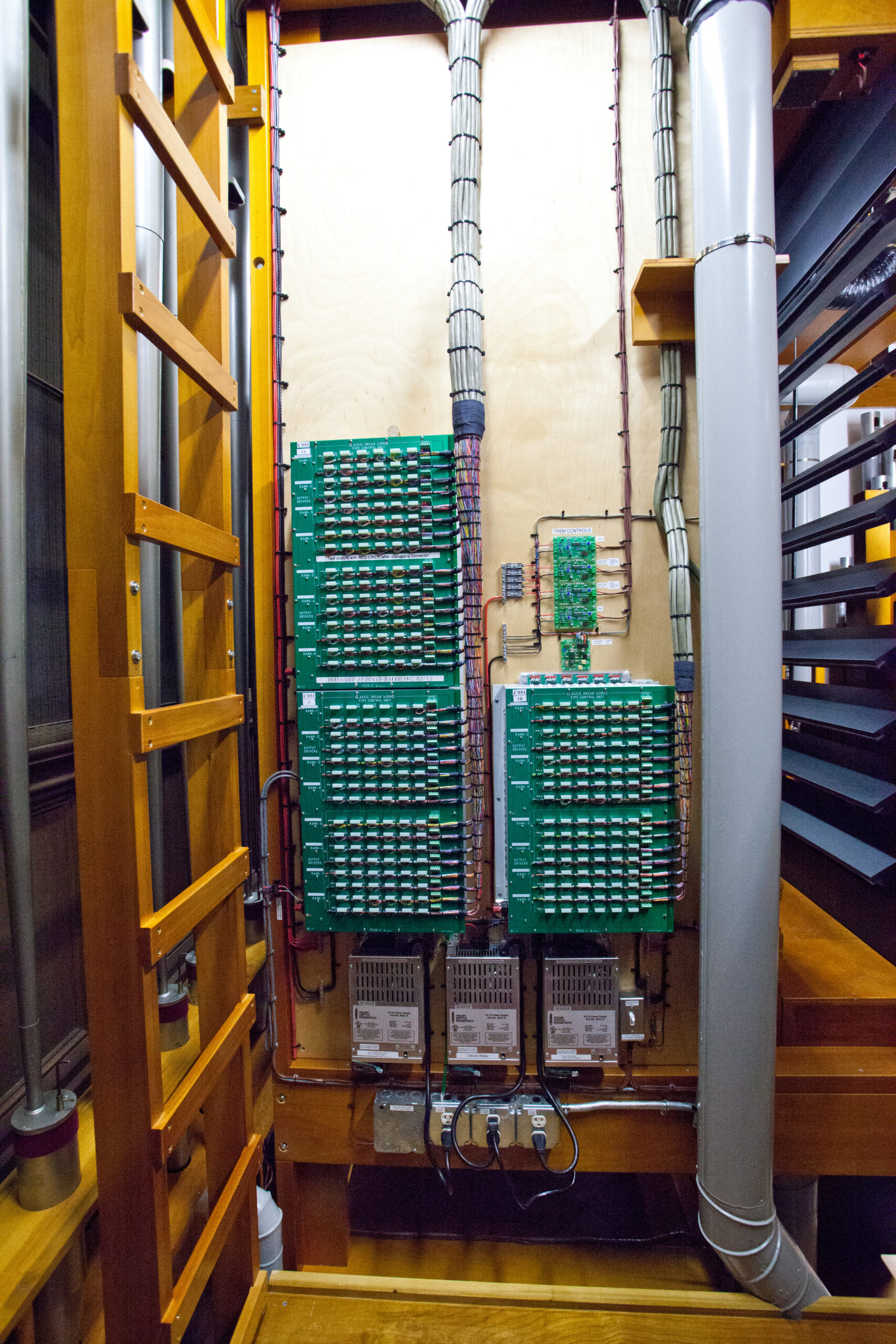
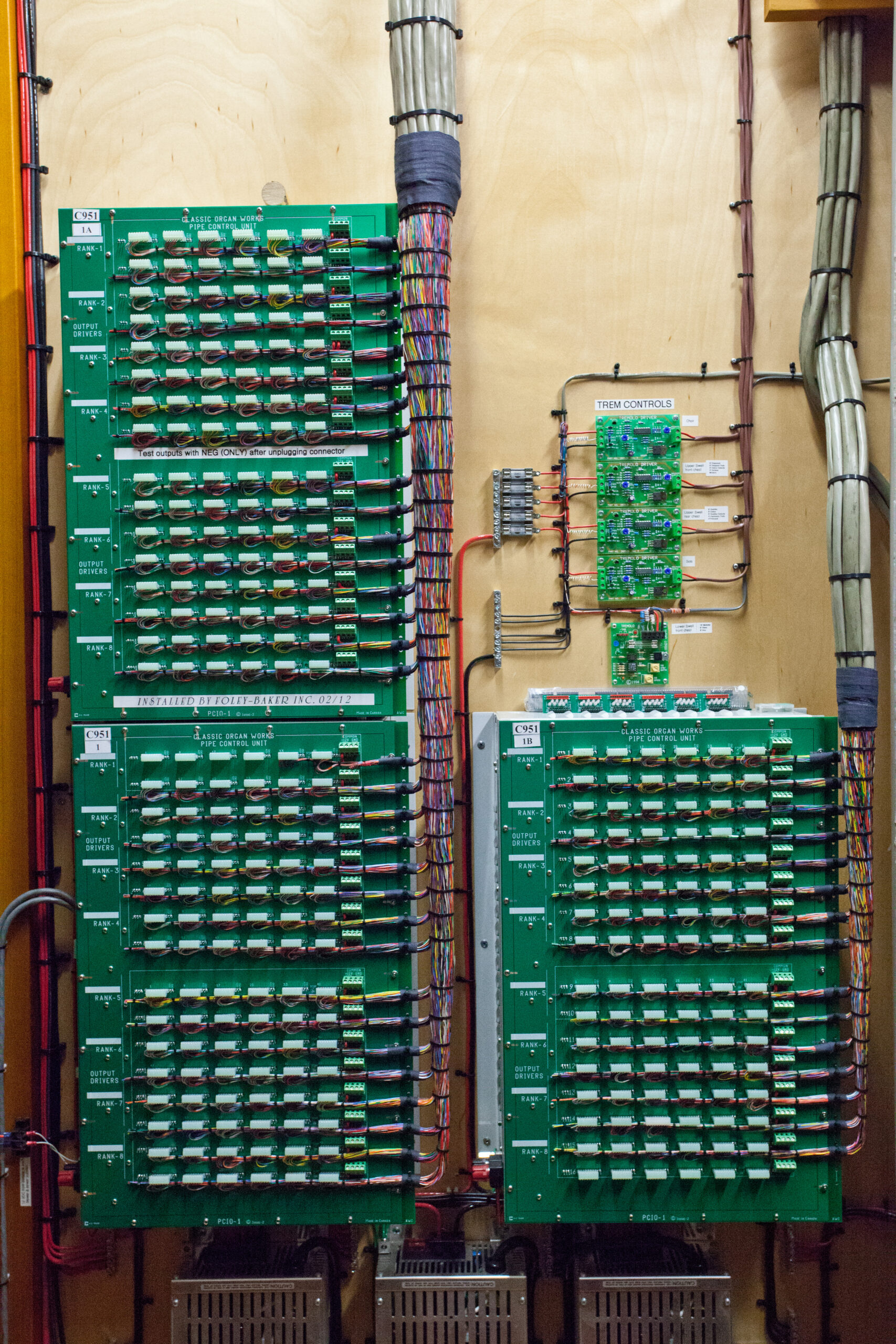
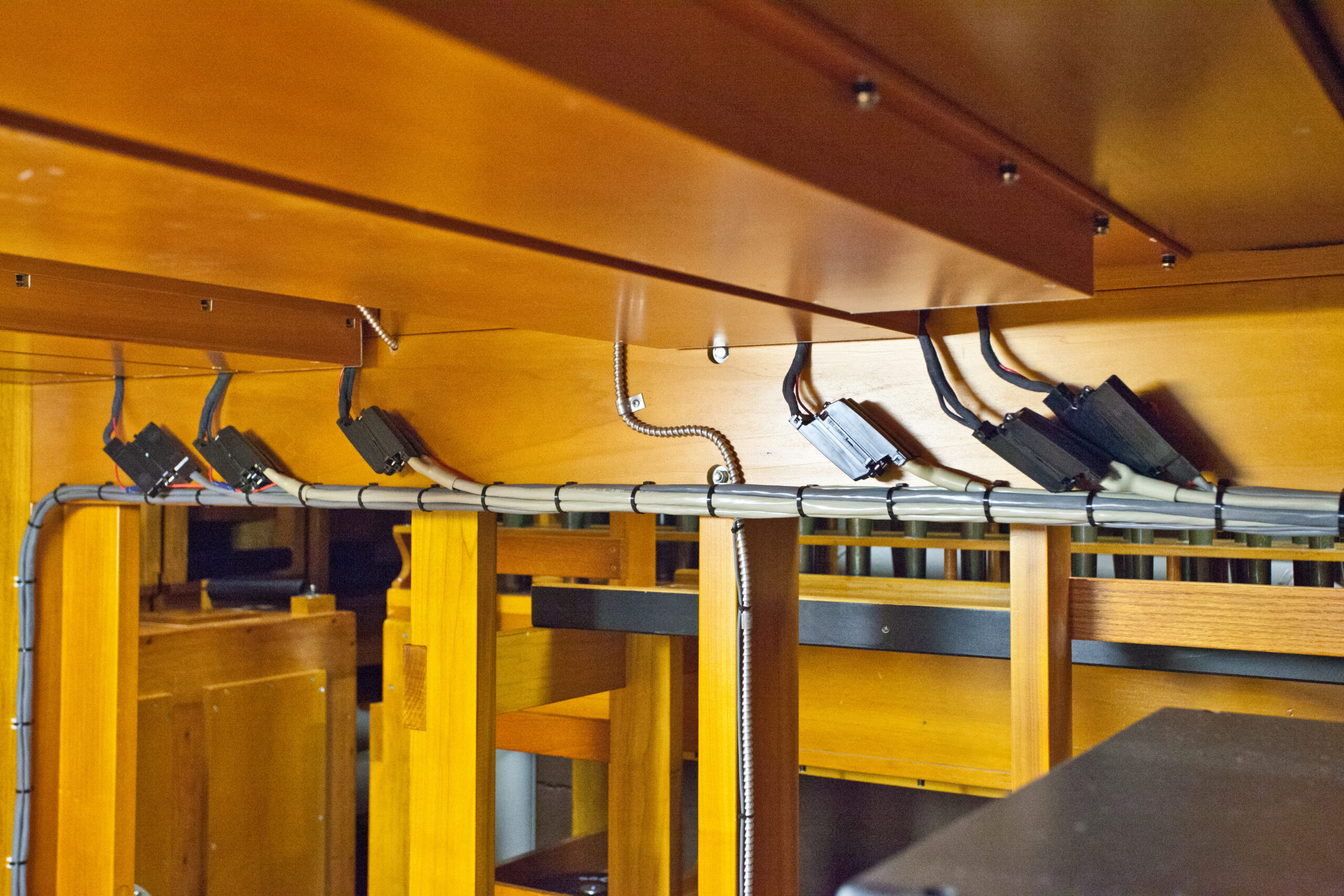
The low-profile Schantz console dating from 1990 was reused, with modified stop jambs, new drawknobs and burled mahogany jamb faces for a sharper appearance. Schantz graciously provided and installed easy to read, new piston buttons. We installed a new electronic relay that is easily accessed by simply raising the now hinged console lid.
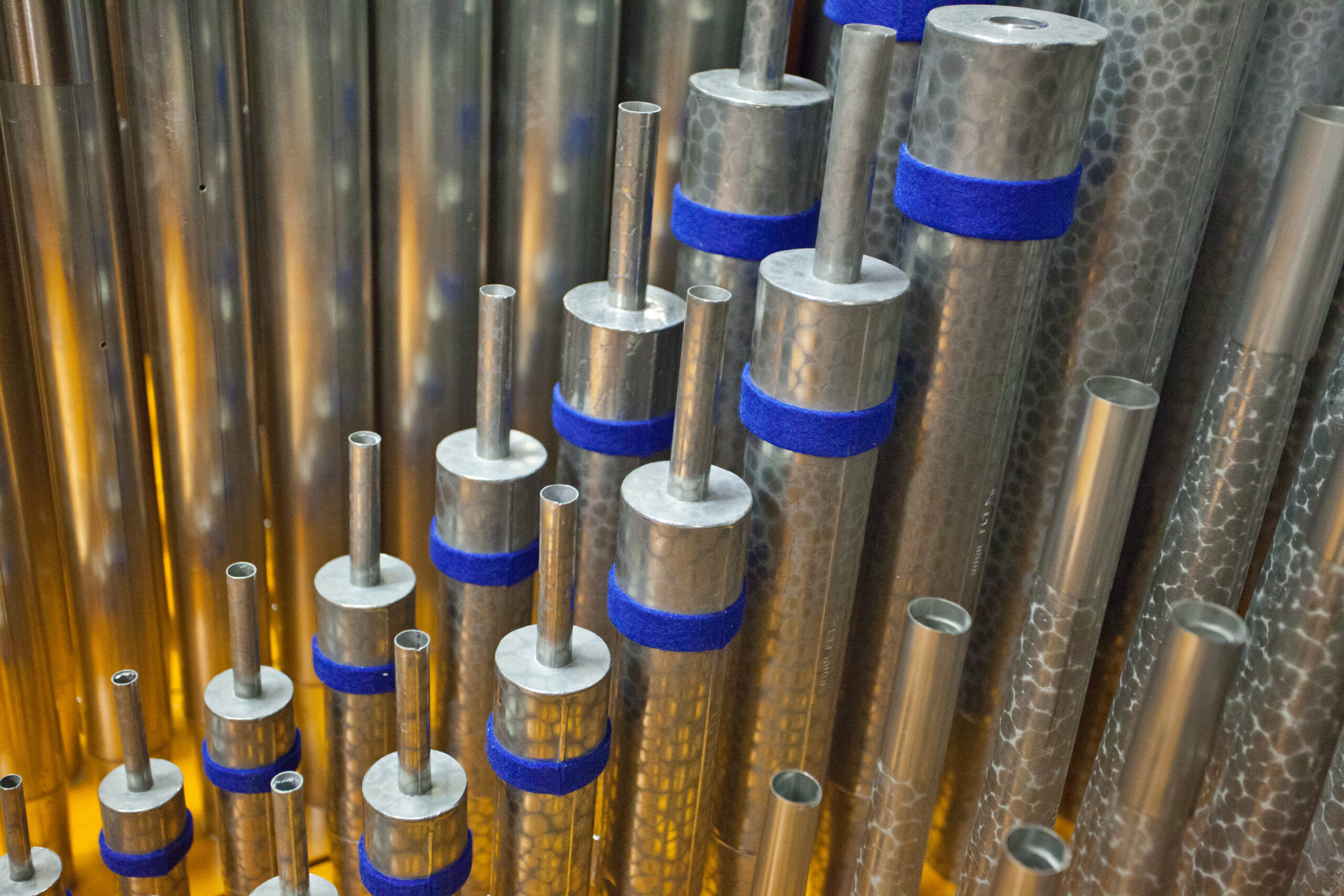
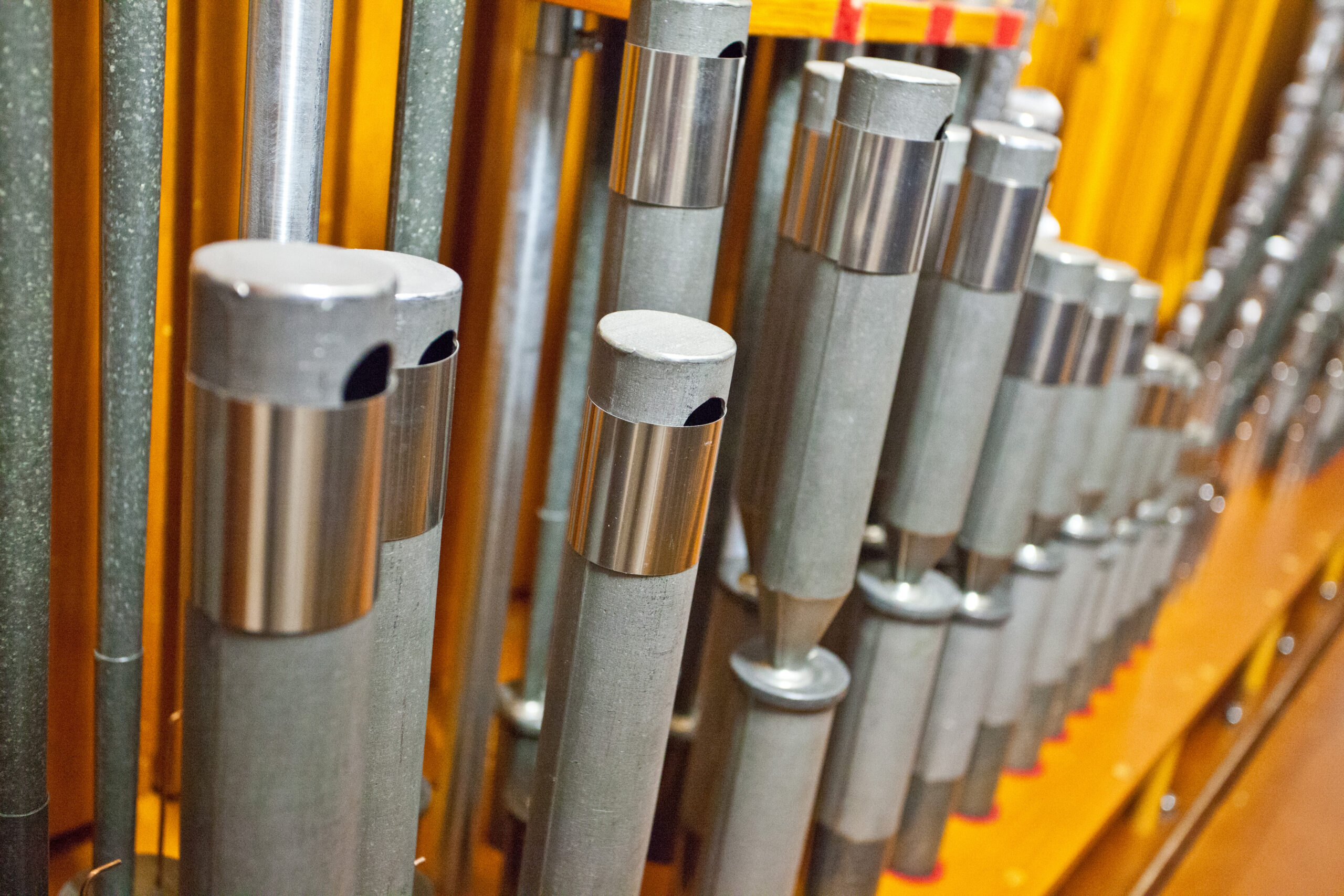
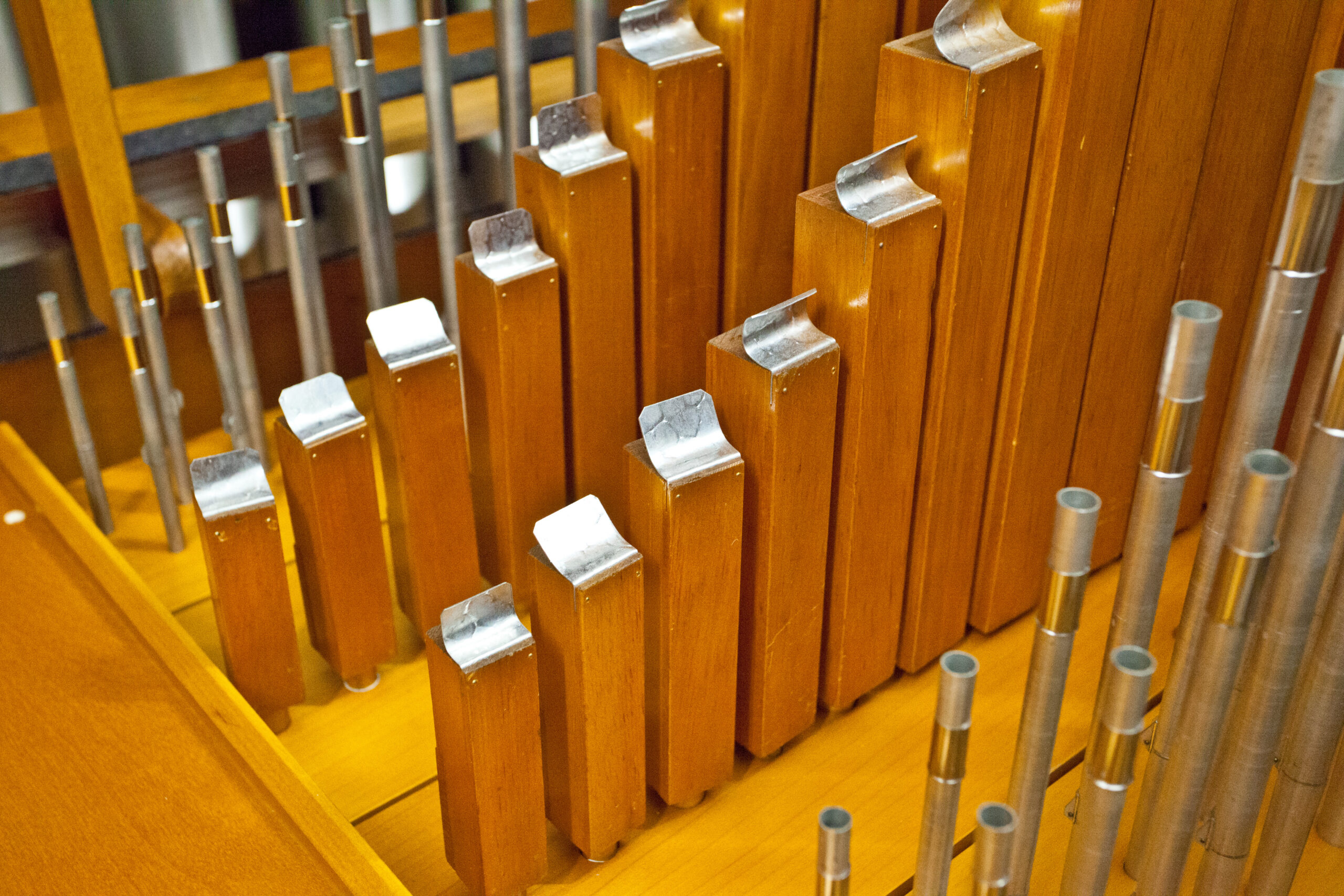
Years of change had seen many stops swapped between divisions. The Choir Diapason had been moved into the Solo as a 4’ Octave. We returned it to the Choir at 8’ with a new bass octave. The Welte Second Open found in the tower became our Great Diapason. Other stops were also returned to their original 1928 locations. The renewed instrument is a blend of remaining Welte pipework, selected Möller ranks, and important new registers. All retained ranks were cleaned, repaired and revoiced, perhaps none more important than original large pedal basses and their Welte chests. These provided the weight and heft we envisioned as a foundation for the new instrument.
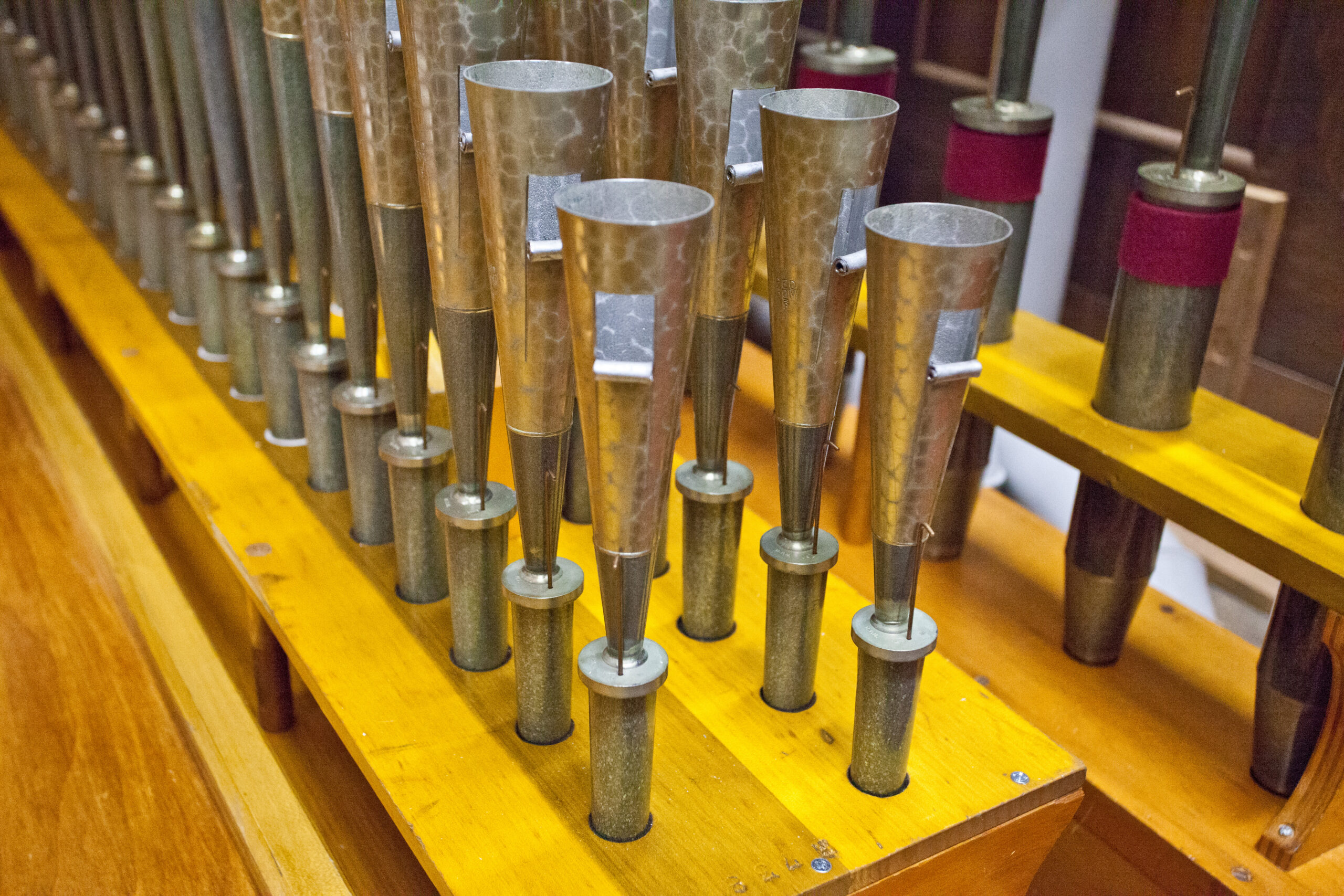
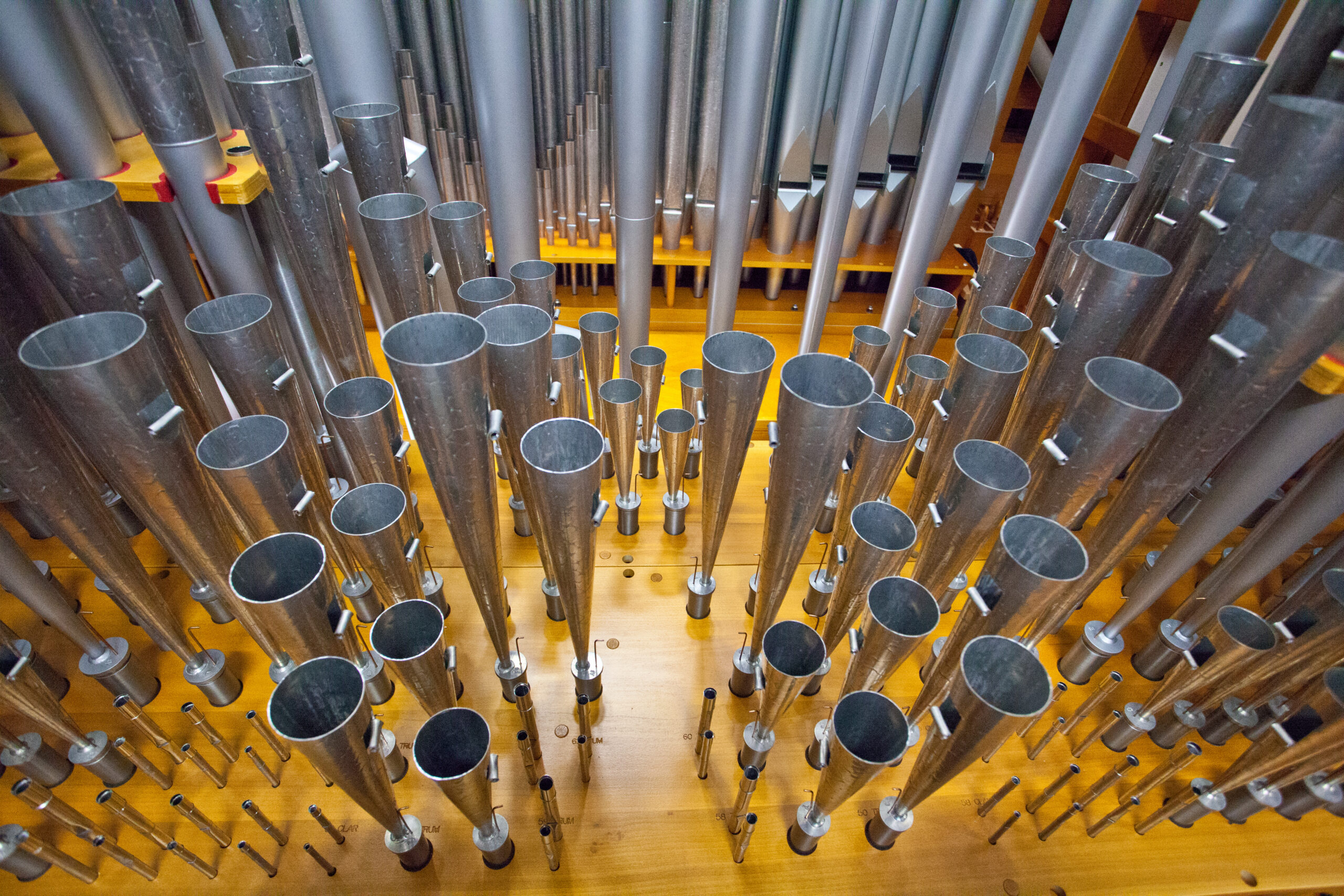
The reed stops presented their own challenge, with ranks by five different builders and, in some cases, using scales and pressures dictated by available — or unavailable — space. Working with Chris Broome of Broome & Co. we examined the potential of each rank for our new scheme. In the end, we designed and had built for us an all-new Great reed chorus. Having found the original 1928 Welte 4’ Clarion, we were able to use it to recreate Welte’s original Swell reed Chorus; industrial strength pipes with a just-right massive sound. A small-scale yet piercingly loud Möller Trumpet, which had been taking up valuable room in a corner of the Great, was revoiced into an ideally scaled Choir Trompette. Chorus reeds now serve to cap wonderful choruses, enriched by solo stops such as the Skinner Clarinet or Kimball Corno d’amour.
The new organ’s sound ties together all the good qualities that go into creating it: the new specification, high pressures and large scales, the chamber’s ability to project sound and the swell shutters’ ability to contain it; and the new layout and chassis, which provided optimal placement for all stops. Even 1928 pipes can look (and sound) like new. We were really thrilled to hear Canon Musician Ray Johnston play the “new” organ at the inaugural concert on May 19, 2012, an outstanding program that included Brass and the Cathedral’s choirs. To him and David Engen we owe thanks for supporting us in this challenging and rewarding project.
All photos of the Cathedral and reconditioned instrument are by Mark Manring (www.manring.net)
Let’s Preserve Your Pipe Organ
Whether you are planning a reconditioning or addressing tuning and mechanical issues, Foley-Baker provides expert guidance from assessment through completion. We'd love to hear from you.