
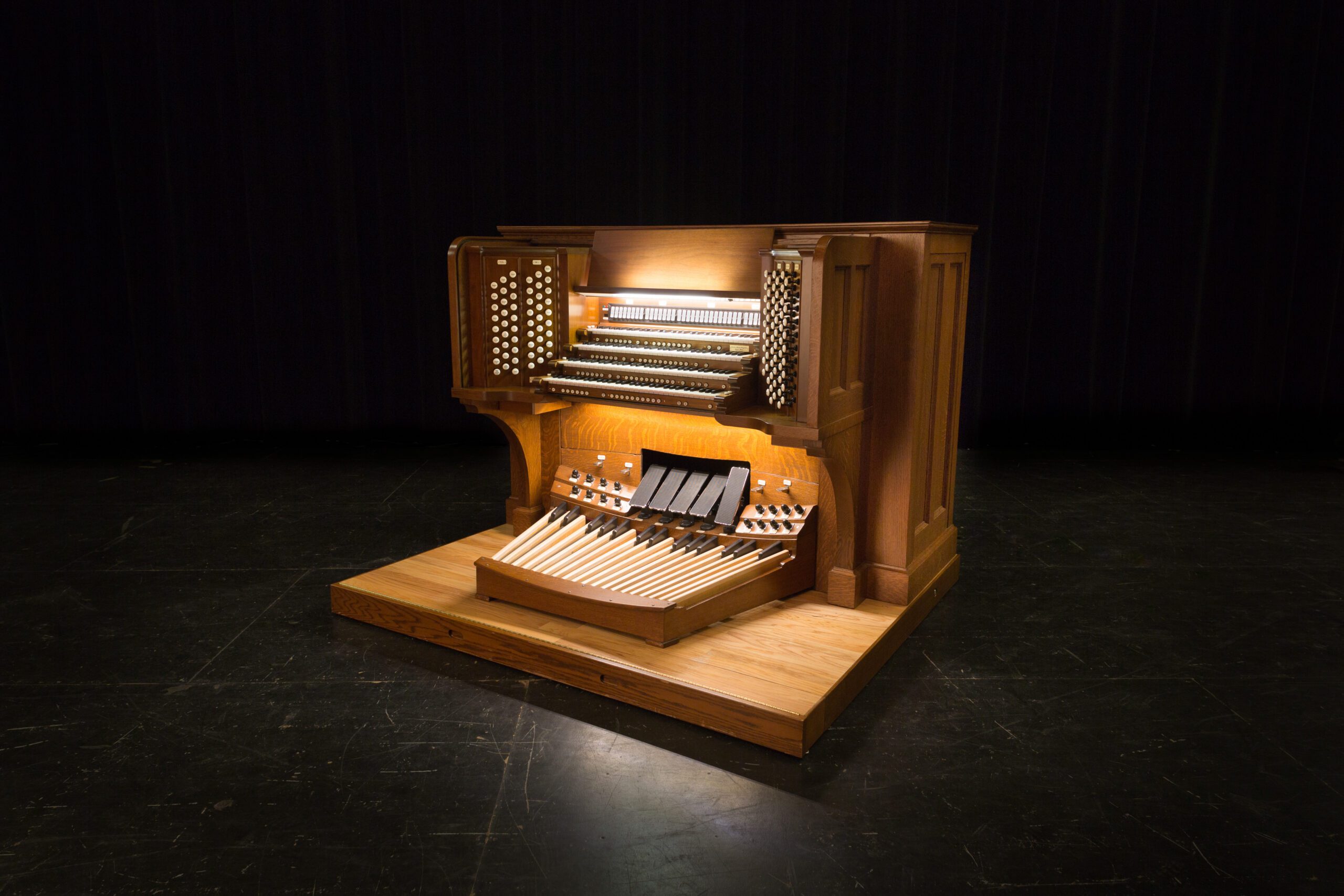
Completed in 1929, Cyrus Northrop Memorial Auditorium was named after the University of Minnesota’s second President and remains an iconic structure on the University’s Minneapolis Campus. The Aeolian-Skinner, Opus 892, was installed in four sections between 1932 and 1935. We were called to survey the organ in 2009. Northrop seated 4,847. It was 206’ from the stage to the balcony’s rear seats. From there, one almost needed binoculars to see the console. I was used to seeing a theatre’s organ chambers in the side walls aiming the sound squarely at the audience. Here, the pipes were in chamber placed above the proscenium arch and nearly buried back against the fly-walls. A sculptured plaster tone chute struggled to direct sound down and through a ceiling grille. The organ’s doom was nearly sealed when a huge acoustic shell, an attempt to improve the sound of the Minneapolis Symphony Orchestra was constructed in the late 1960s. It extended out about 30’ from the top of the proscenium leaving the organist, in the orchestra pit far below, so separated from the sound that one could think it was coming from another room.
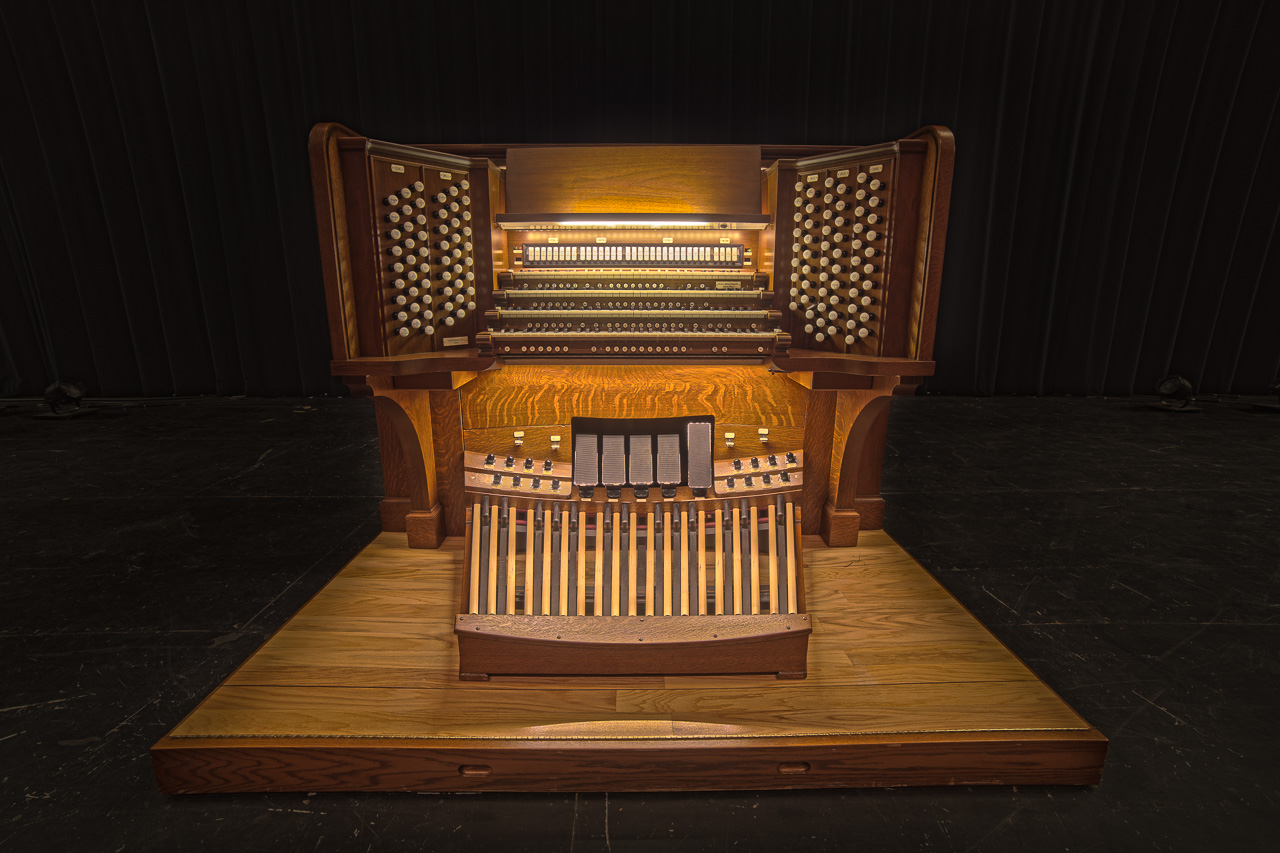
The console enjoyed a separate lift in the center of the otherwise stationary orchestra pit. More than marred, its case had been damaged by people jumping from stage to console as a quick way down to the pit. The Vertical Selector combination action failed years back. Lack of light made one feel as if you were nearly playing in a cave.
On the other hand, partly thanks to the fact they were difficult to access, we found the chambers essentially untouched. Had time stopped? University organist, Dean Billmeyer, and those that preceded him genuinely appreciated Opus 892 and had closely watched over the instrument. After 76 years, chamber equipment was very dirty but not damaged.
The organ was still being used; however, the halcyon days of weekly radio broadcasts and regular use with the Minneapolis Symphony (which relocated to a new Orchestra Hall in 1974), were long over. At the time of our survey things were reduced to convocation and commencement ceremonies, as well as occasional organ lessons and concerts…all kept alive by Dean’s good efforts. It was a dirty, old, but fabulous instrument! Needless to say, we were more than delighted to be presented with the challenge of making it look and sound beautiful and work perfectly once again.
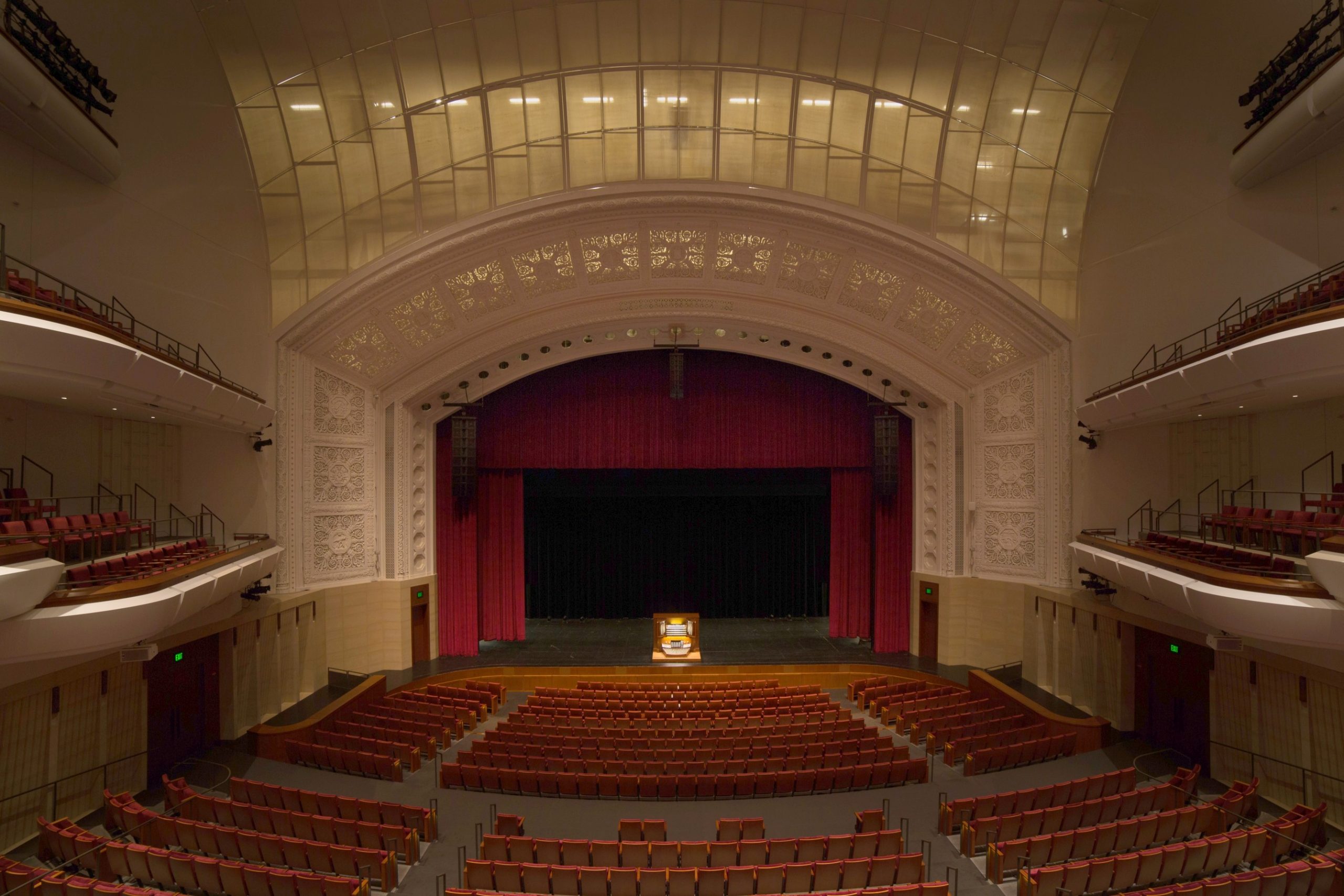
Although Professor Billmeyer had been diligently collecting funds to recondition the organ, it became the $88M building remodeling project that finally launched things. The total interior of Northrop would be gutted to the outside walls. Seating would drop to 2700 in what would become a stunning, triple balcony, state of the art performance space…but beyond chamber prep, there was no funding for the organ. The good interest of past University President Robert Bruininks, who viewed Opus 892 as a “priceless treasure”, led to a last minute and large donation from the estate of alumnus Dr. Roger Anderson. This assured that the Aeolian-Skinner would be included…totally reconditioned and installed in the new Northrop.
But where? Along with the rest of the building’s interior, the original chambers would be demolished. The very large 25 horse power, triple bearing Spencer blower would need a new isolated location. With the dedicated console elevator gone, space needed to be found for the console’s safe storage. Adequate space for chambers was a big issue, made more complex by the fact that the line-up of uses for Northrop in the 21st century, saw organ rather near the bottom of the list. Regardless, the Skinner was to be accommodated and the architects were determined to fit it in. Initial concept meetings brought consideration for chambers at stage-rear or in the side walls of the new theatre. To organists, either would have been most welcome; however, in the end, it was decided that the chambers had to go back above the proscenium arch which, by the way, was the only original portion of the auditorium that was retained. Regardless, the reinstated and compromised chamber placement would come with improvements:
1. Rather than speaking into a poorly placed ornamental grille, the complete chambers would instead face directly into a new, 100% diaphanous mesh screen that almost invisibly makes up the massive organ egress surfaces now above the proscenium. Finally, all the organ’s sound would get out.
2. There would be nothing, such as the old sounding board, blocking tonal egress.
3. A special designed (sculptured) ceiling would span the entire area in front of the organ chambers and deflect the organ’s sound down toward the stage and into the auditorium.
Indeed, tonal egress is far improved and the sound deflecting panel works well. The new, deeper orchestra pit makes it possible to place the console farther yet toward the audience and almost directly under the chamber grilles above. There’s further improvement when the stage wall-surrounds for orchestra performances are erected.
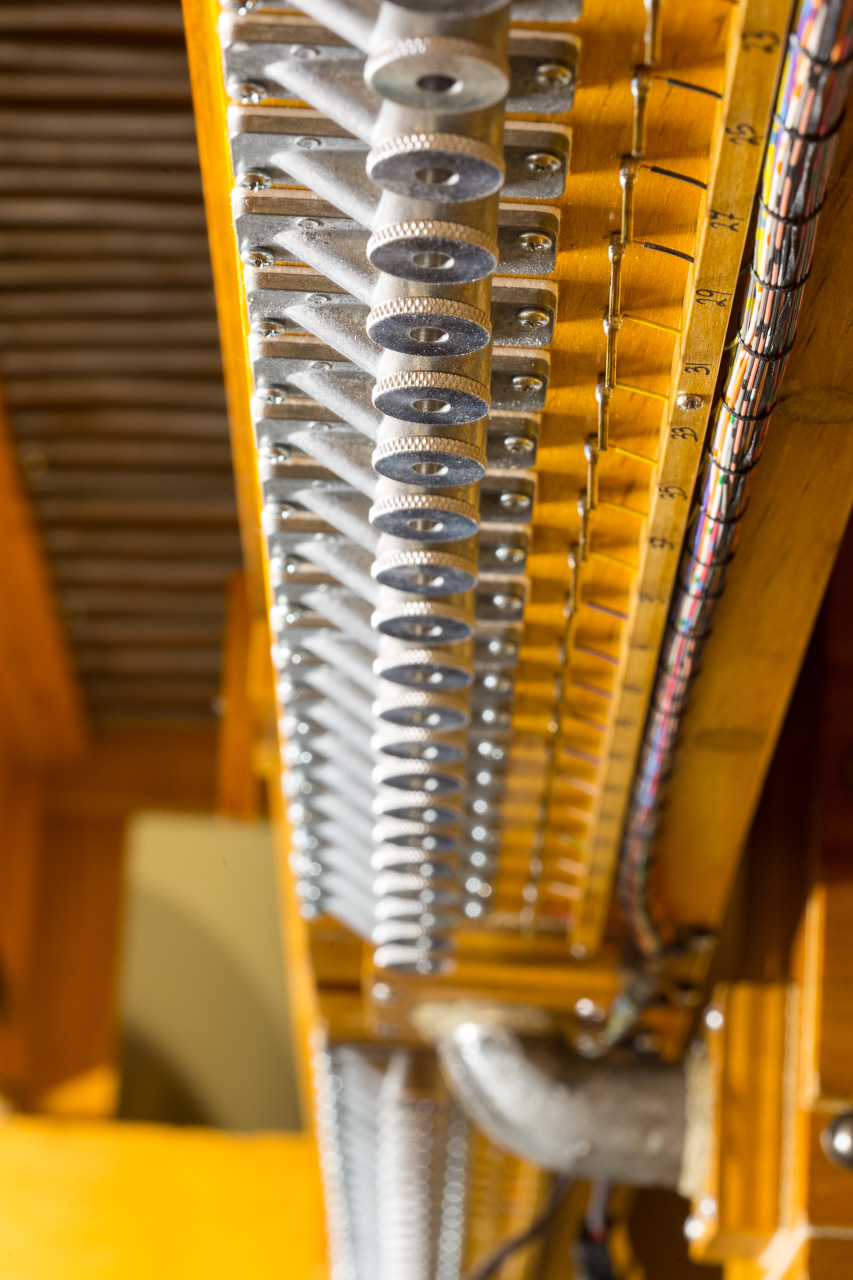
The organ reconditioning process included everything. Virtually every piece of leather in the instrument was replaced. This included every valve and even the valve stems. So that the organist could enjoy the best possible articulation, the double primaries of each action were adjusted to within fractions of an inch. We also used double tanned pouch leathers which are essentially non-porous. Everything was done to make the organ’s actions as fast and articulate as possible.
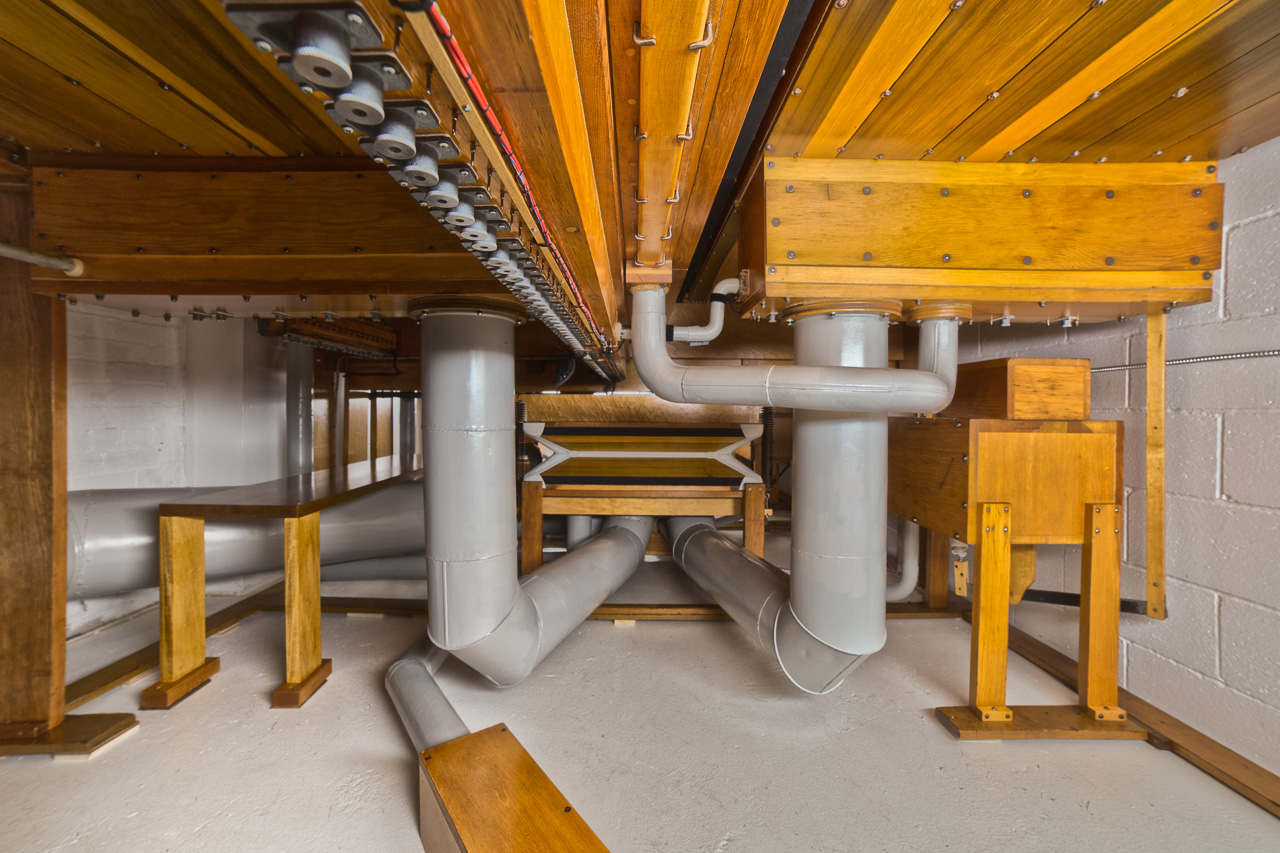
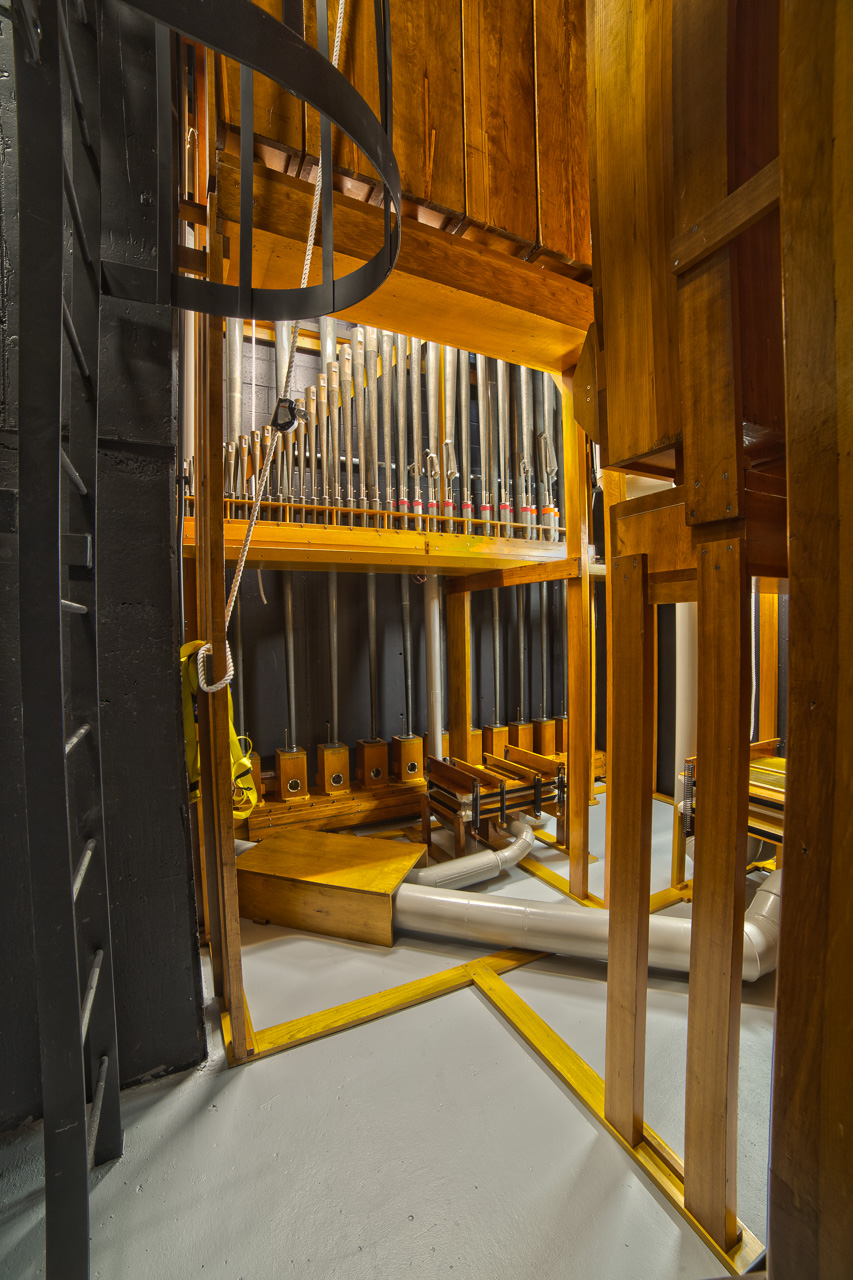
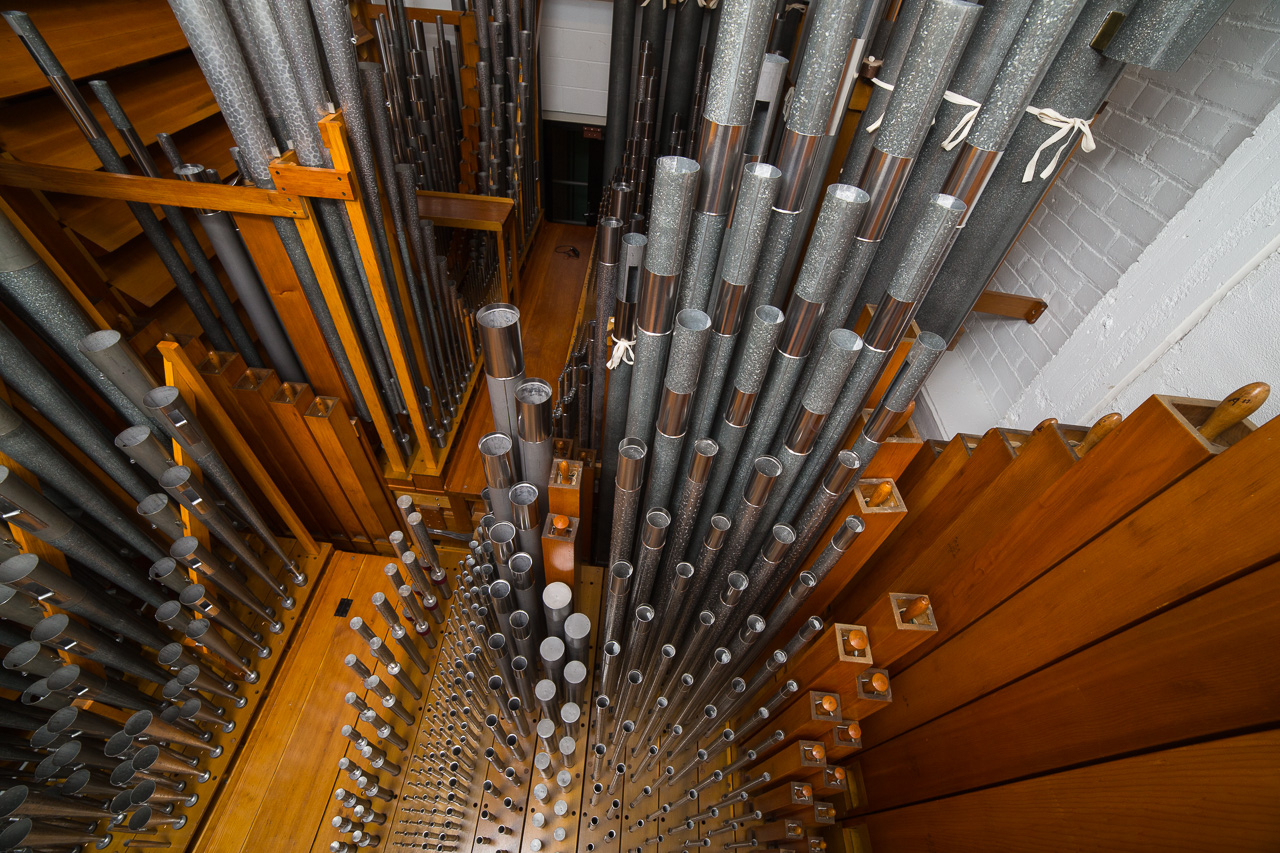
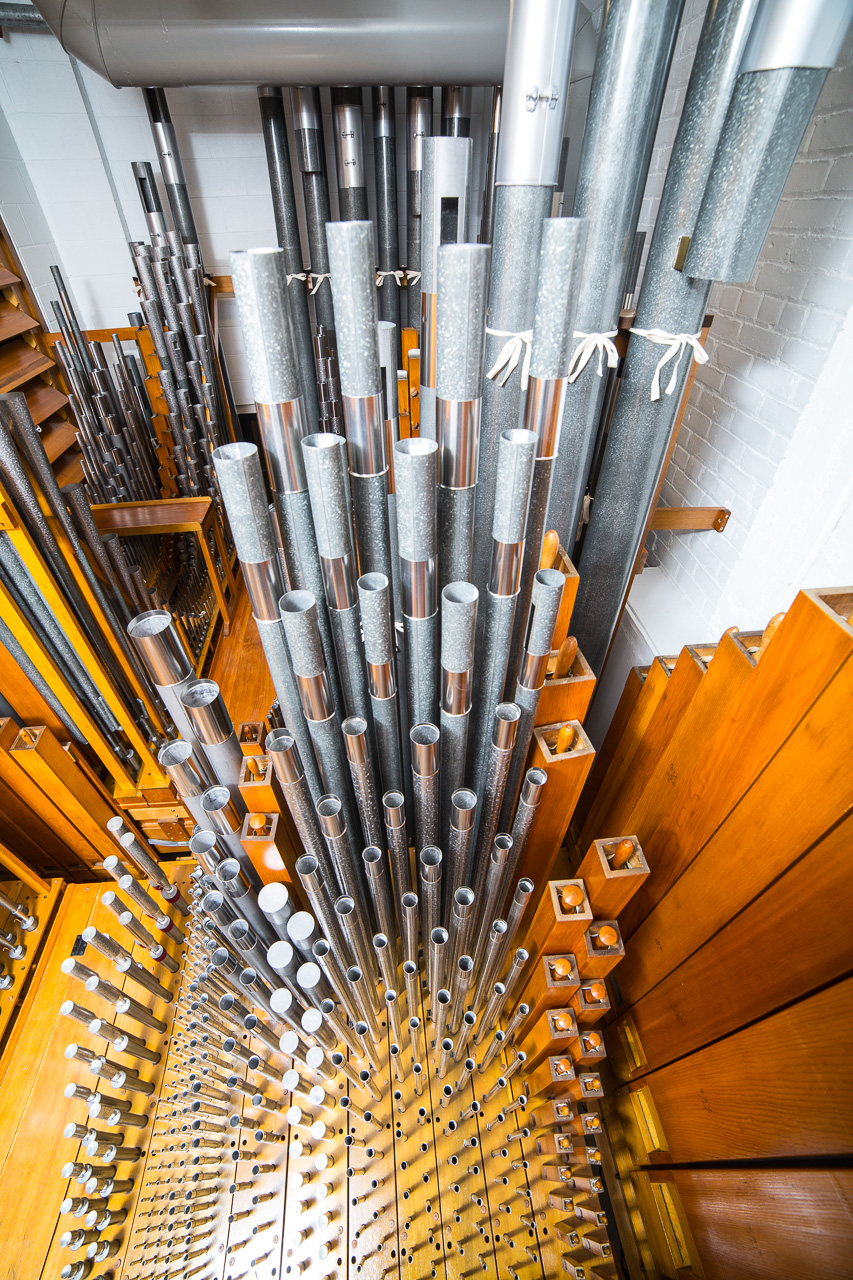
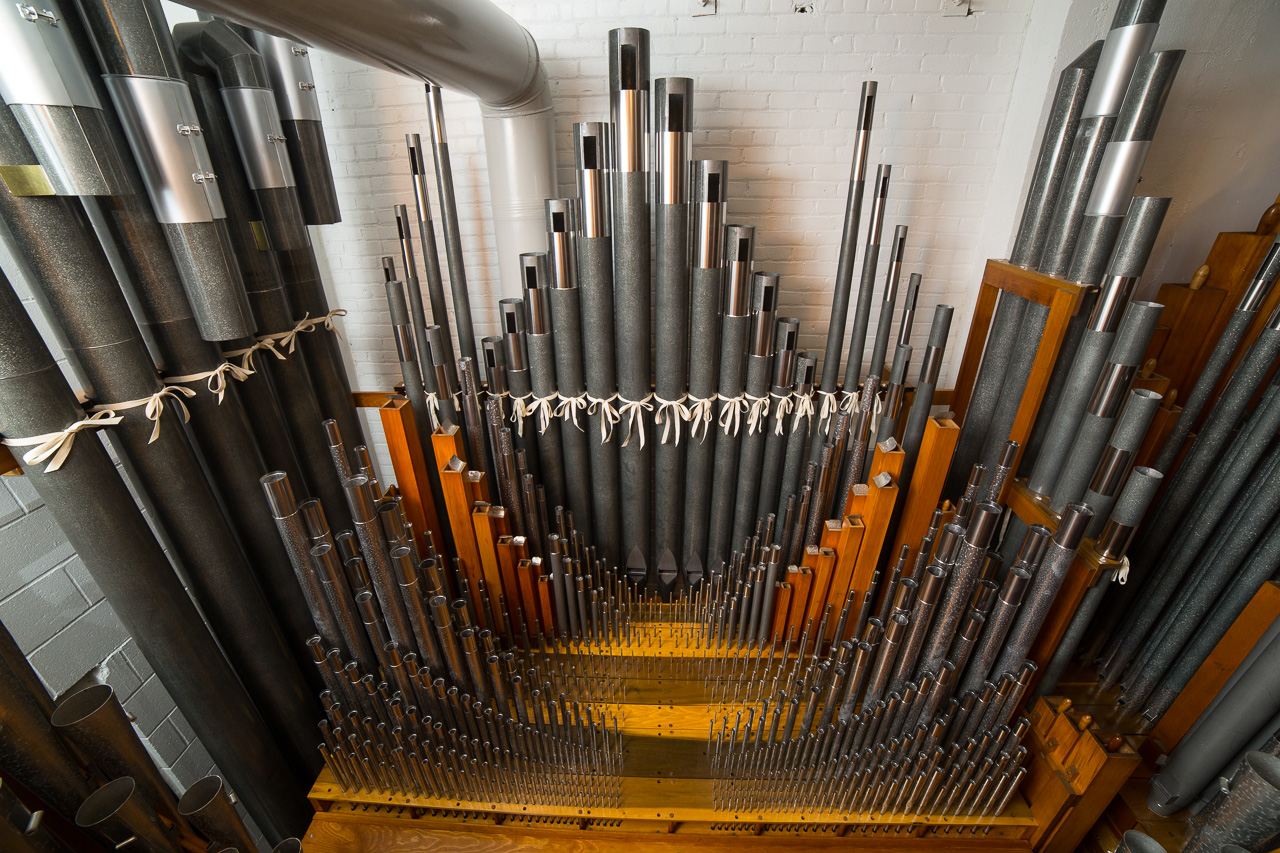
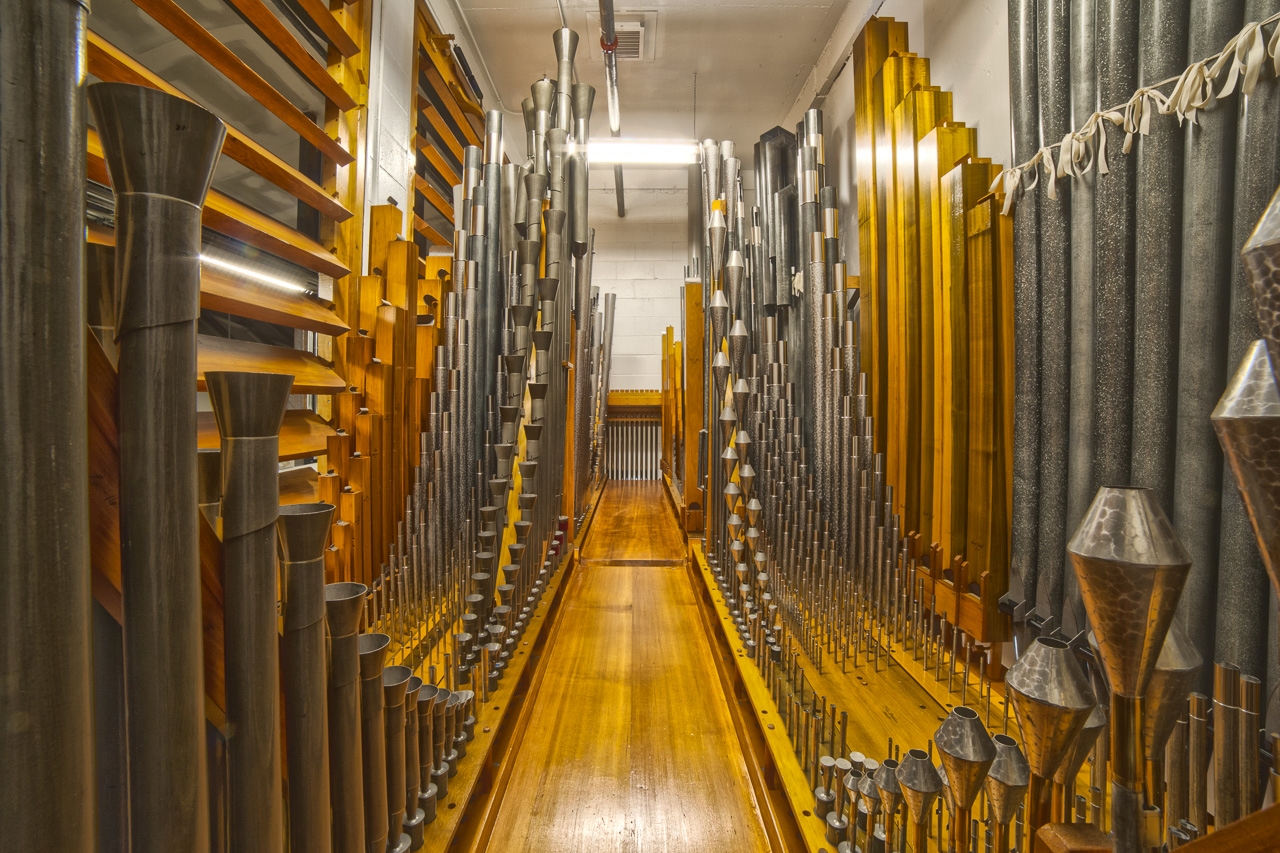
All Skinner’s swell engines were rebuilt and their actions choked to achieve a seamless shade motion that was fast and silent. Any new wind lines, including all those from the blower room are all soldered-galvanized metal. Numerous internal chamber wind lines were repaired and every flange gasket replaced. Reservoir wind-box interiors were felted so that each acts as a sort of muffler thereby keeping this giant wind system, of generous pressures, silent. Every screw-head was polished and for the best possible serviceability, all the chambers are washed with LED fluorescent lighting plus a generous sprinkling of service duplexes. The console is renewed inside and out. The organ has been totally rewired with new telecommunications cable as per NEC specs. The blower is totally rehabbed with a (necessary) new motor.
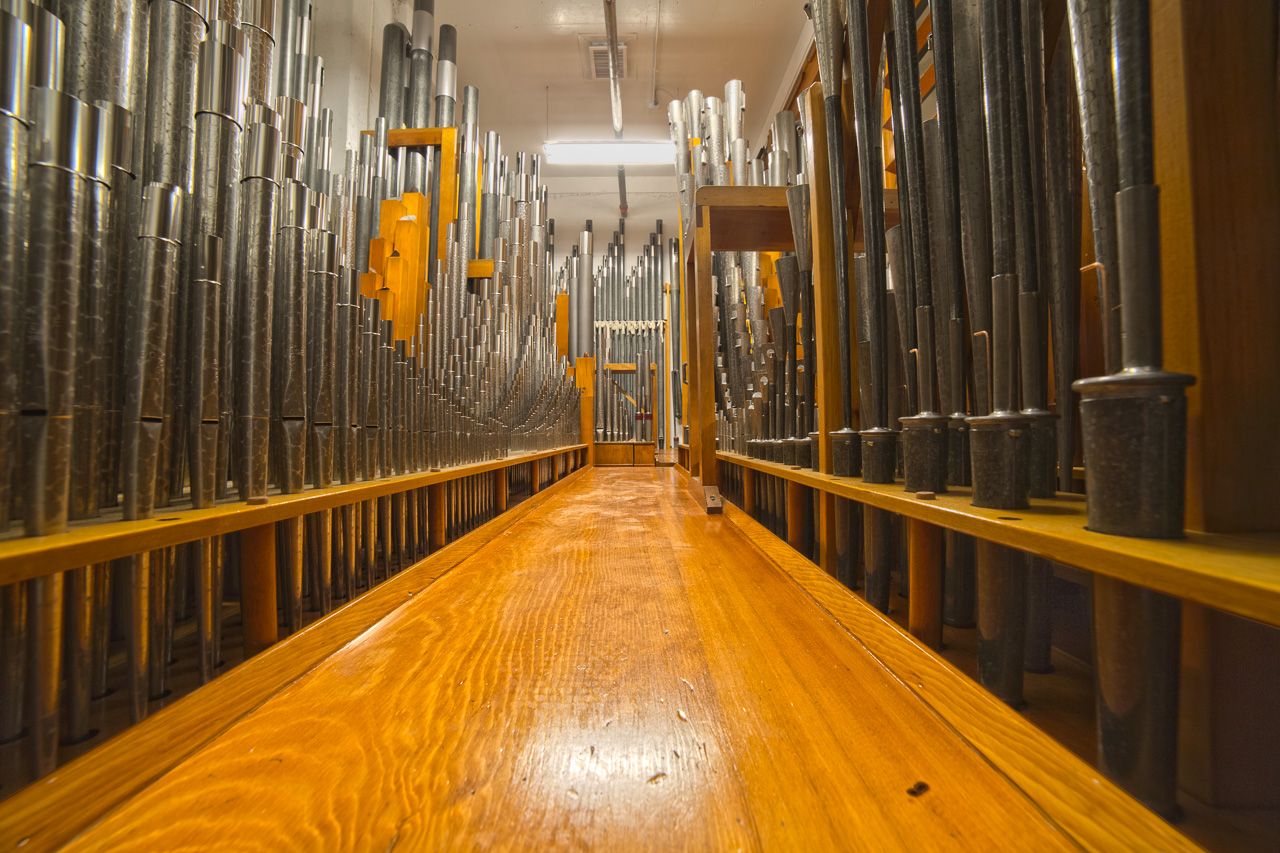
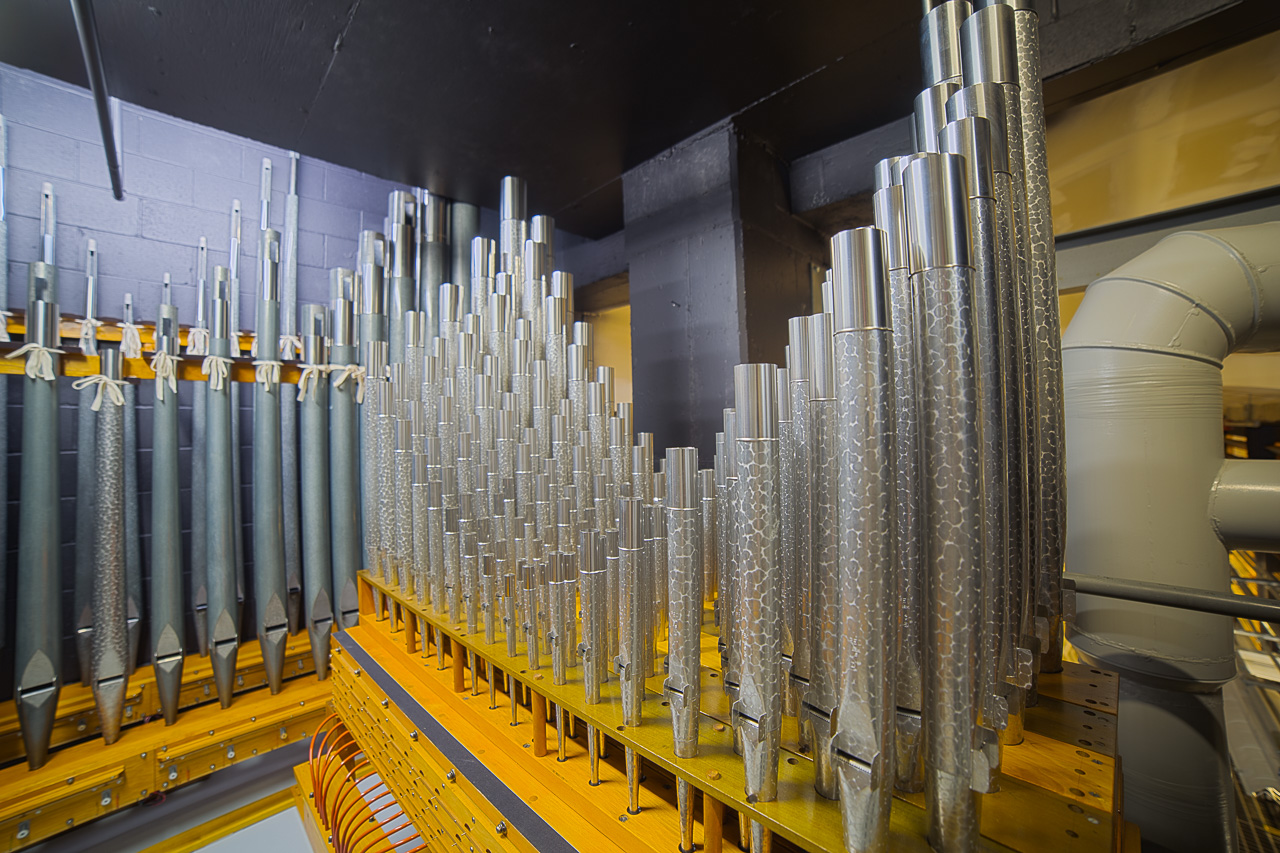
Perhaps because they’d been handled so seldom, the organ’s metal pipes cleaned up to a truly like-new appearance. Wood pipes also cleaned up beautifully; however, the very wide humidity swings common to Minneapolis saw the largest wood stops develop numerous cracks. Each of these were spline repaired. Although we’ve found this on a number of other organs, there were over a hundred pipes that had never been made to speak! Close inspection bore this out. It seems that overall pipe speech was, in places, hit or miss. This was a time when Harrison and Skinner were speaking only when necessary and we wonder if either ever invested all the time necessary on tonal finishing; after all, whose job was this? We have utmost respect for this venerable Boston firm and its instruments but, just how this happened will be a question that looms forever. Needless to say, every pipe is now speaking beautifully.
Besides our regular staff, a few outside contractors assisted:
1. David Beck played a significant part in assisting with shop and field flue voicing.
2. Broome and Company reconditioned the reed stops.
3. OFS of South Windsor Connecticut, refinished the console.
We much appreciated the input and help of University staff, all crucial to this project:
1. Michael Denny, (Northrop Project Executive)
2. Roger Wegner (Lead Architect)
3. Professor Dean Billmeyer, University organist and Professor of Music.
As happens on some large projects such as this, we were sub-contracted, in this case to the Northrop project General Contractors, J.E. Dunn Corporation of Kansas City, MO. They, and all the above involved, were significant players and I’m happy to report that we enjoyed working with each and every person to finish this large organ project within budget and on time.
Work was completed in 2018. Photos by Liam Flahive.
Let’s Preserve Your Pipe Organ
Whether you are planning a reconditioning or addressing tuning and mechanical issues, Foley-Baker provides expert guidance from assessment through completion. We'd love to hear from you.